Why Cheaper LLMs Can Cost More: Claude Sonnet vs Opus Cost per Task
Sonnet 5.5 is half the price of Opus 5.5 per token, but extra turns and retries can erase that. Worked cost per task, break-even and how to measure it.
Ganivra field notes
Practical analysis for teams measuring AI usage, token consumption, agent cost, MCP tool usage, customer cost-to-serve, and AI gross margin.
Sonnet 5.5 is half the price of Opus 5.5 per token, but extra turns and retries can erase that. Worked cost per task, break-even and how to measure it.
Compare Helicone alternatives on cost: proxy or not, cost per customer, margin against revenue, Claude Code and Codex, self-hosted GPUs and price, with sources.
Reconcile AI usage, provider invoices and customer revenue with a worked monthly close, discrepancy register, margin review and downloadable sample close pack.
Price AI credits with worked examples for subscriptions, packs, top-ups, refunds and heavy users. Calculate credit rates, contribution and margin targets.
Find loss-making AI customers with a worked margin review, shared-cost allocation rules, missing-data checks, FAQs, and a free downloadable worksheet.
Compare six AI cost-per-customer tools by attribution, revenue matching, reconciliation, integration effort, pricing, and buyer fit.
Calculate AI gross margin per customer with a worked example, shared-cost allocation, revenue matching, and a clear distinction from token-only margins.
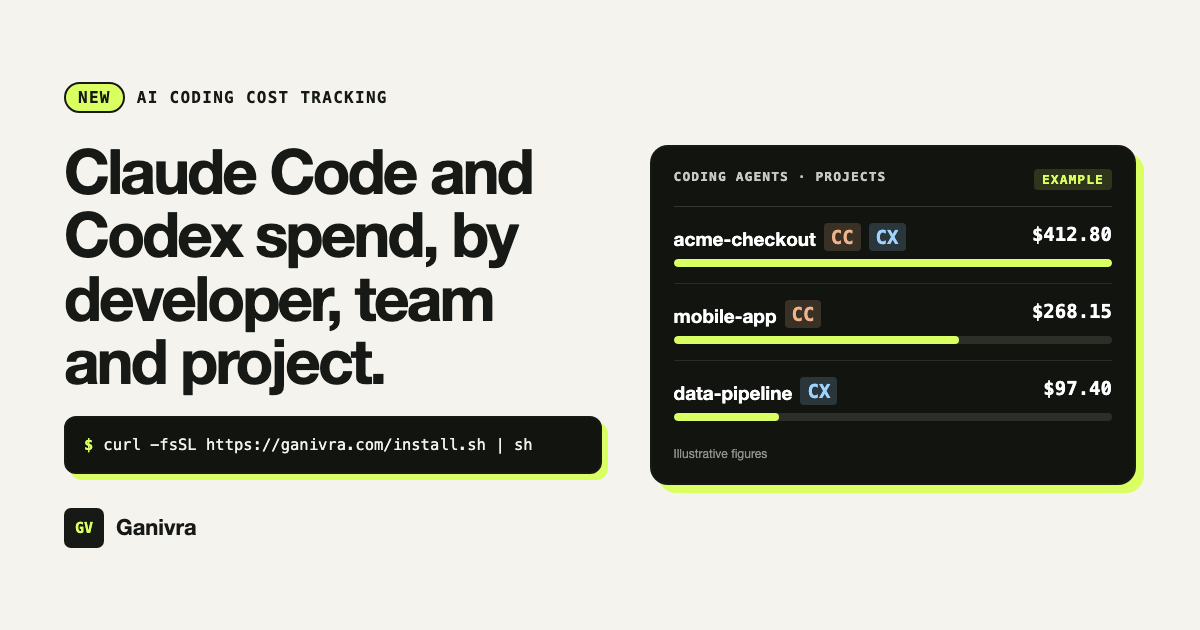
Compare Claude Code cost vs Codex: subscription prices, API token rates, a 25-developer budget, and how to measure cost per completed task.
Track Codex usage by developer and project. Compare OpenAI dashboards, analytics APIs, and OpenTelemetry for limits, token usage, and cost reporting.
Track Claude Code usage by developer and project. Compare free trackers, native analytics, and paid monitoring tools to understand tokens and costs.
What OpenAI Codex, Claude Code and GitHub Copilot cost a 50-developer team in three scenarios: mostly light users, a mixed team and heavy agent users.
How finance can charge Claude Code, Cursor and GitHub Copilot costs back to teams and cost centres, with a free chargeback spreadsheet template.
Claude Code spend limits on Team, Enterprise, API and cloud billing: usage credits, member and workspace limits, what happens at a limit, and budgets by team.
Claude Opus 5.5 costs twice Sonnet 5.5 per token. Cost per Claude Code task and team, when Opus is worth it, and how to set your team's default model.
Roll out Claude Code cost tracking to every developer with managed settings: the env block, file paths for macOS, Linux and Windows, MDM, team labels.
Claude Team seats vs API billing for Claude Code: break-even active days, cost for light, typical and heavy developers, and how to pick a plan per developer.
Claude Code loads tens of thousands of tokens before your first prompt. An illustrative small task shows what that starting context costs and how to trim it.
Test Claude Code file access with disposable markers, then measure how extra searches, cached file reads, and retries affect tokens per completed fix.
Got the November 19 Gemini API prepay notice? Switch in Google AI Studio, size your balance before the January price increase, and compare model costs.
A wall-meter test recorded 5,600 output tokens on two GPUs. See the kWh per million tokens, the electricity cost, and a UK grid emissions estimate.
Check GitHub Copilot AI credit usage by model, separate included credits from extra charges, and find your reset date on an individual or company plan.
Compare two OpenAI Responses API usage records. Calculate cost per request and find out how reasoning tokens, cache hits, and extra calls change the bill.
Read one Claude Code session log to see where your tokens went. Compare cache reads, cache writes, fresh input, and output to explain a usage spike.
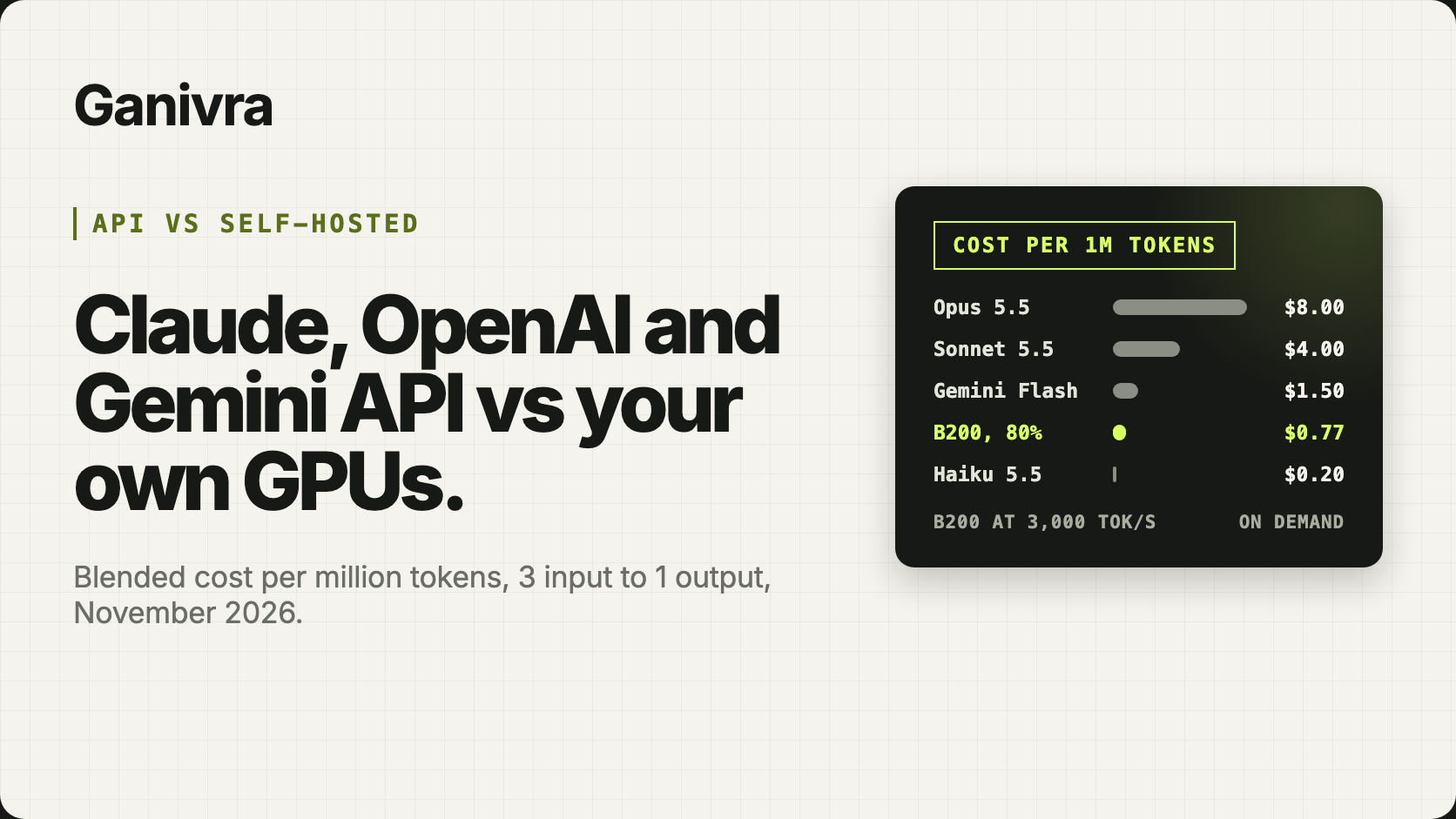
Claude, GPT and Gemini API prices against self-hosted cost per million tokens on rented B200s, the monthly volume where each wins, and what the math leaves out.
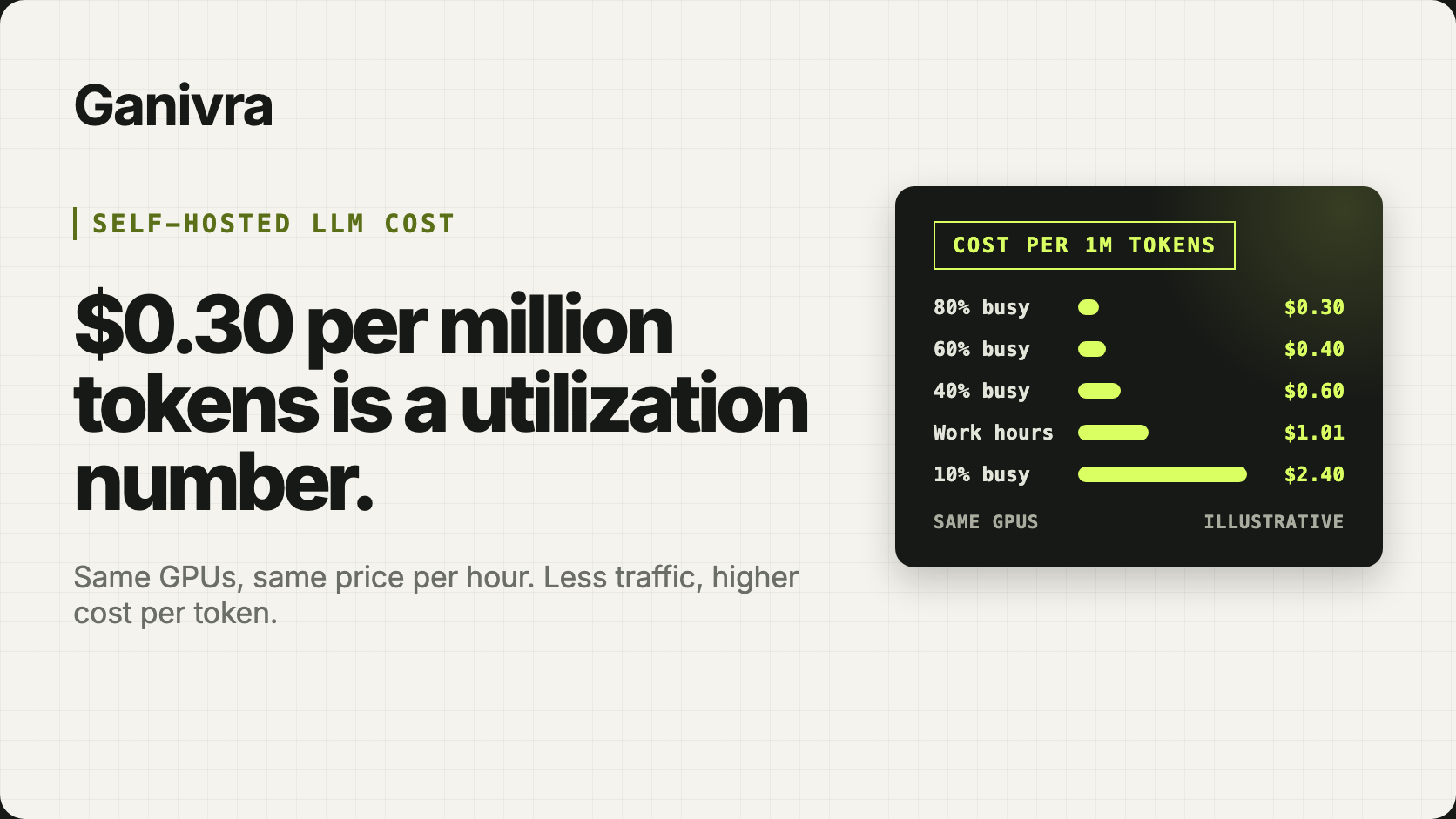
Compare electricity-only and fully loaded LLM inference costs per million output tokens on owned, new, and rented GPUs. See how utilization changes each figure.
Revolut says self-hosted GLM cut its AI coding costs 90%. What GPUs, idle time and staff cost, and the team size where self-hosting beats the API.
Send Claude Code's OpenTelemetry data to Ganivra to see spend per developer, team and model, with settings for every machine and no prompts collected.
Claude Code, Cursor, GitHub Copilot and Codex for teams: seat prices, included usage, overage, and per-token billing, with a worked 25-developer example.
Gemini 4 Argon doubles on December 1, 2026 and Gemini 3.8 and 3.6 Flash on January 1, 2027. Old and new prices, request costs and what to do before then.
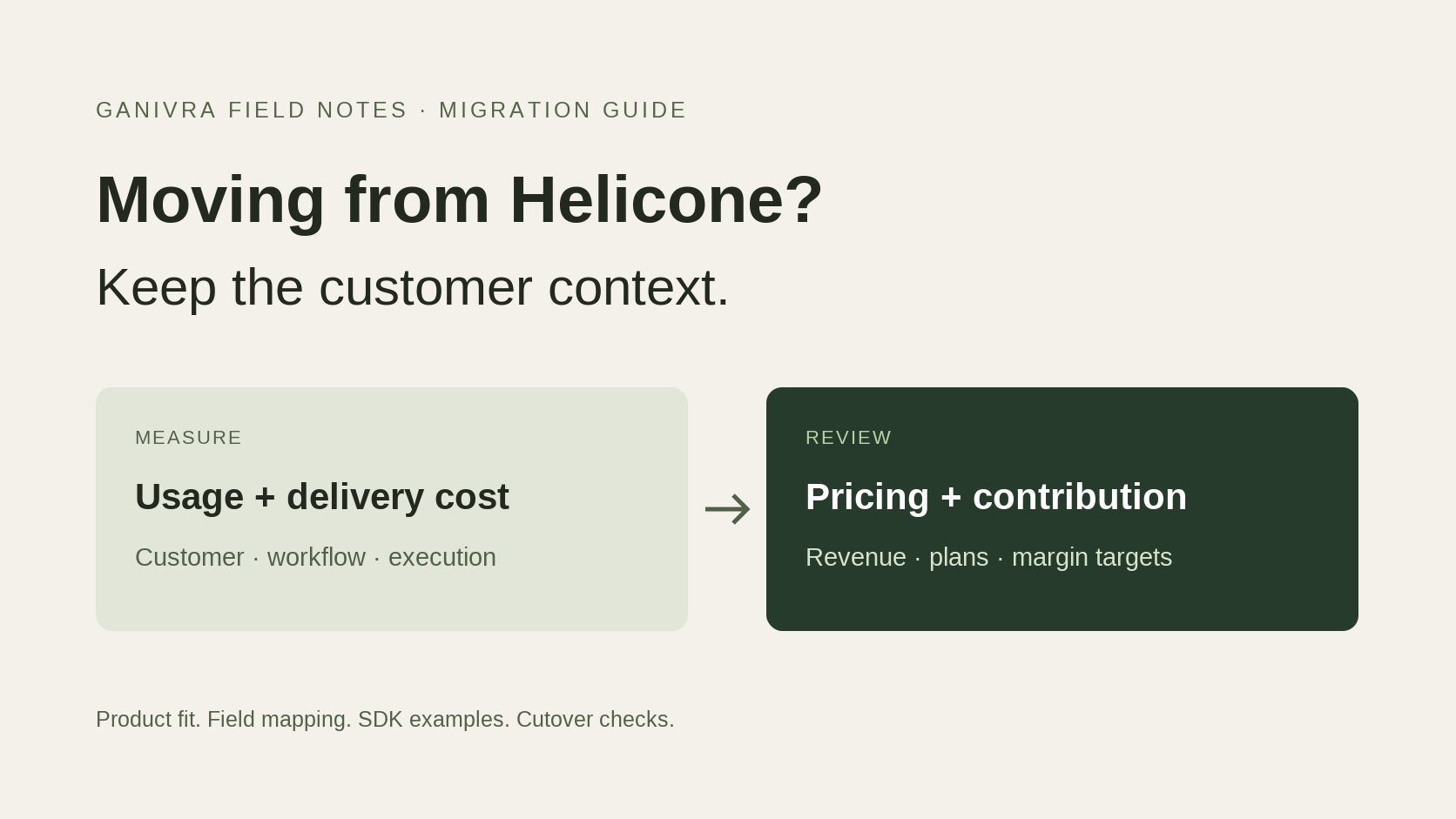
Evaluate Ganivra for customer AI costs and margins, see what it replaces, and migrate Helicone data with field mapping, SDK examples and cutover checks.
Build a fundraising financial model with pricing-plan economics, hiring costs, cash runway and funding scenarios, with a worked example and checklist.
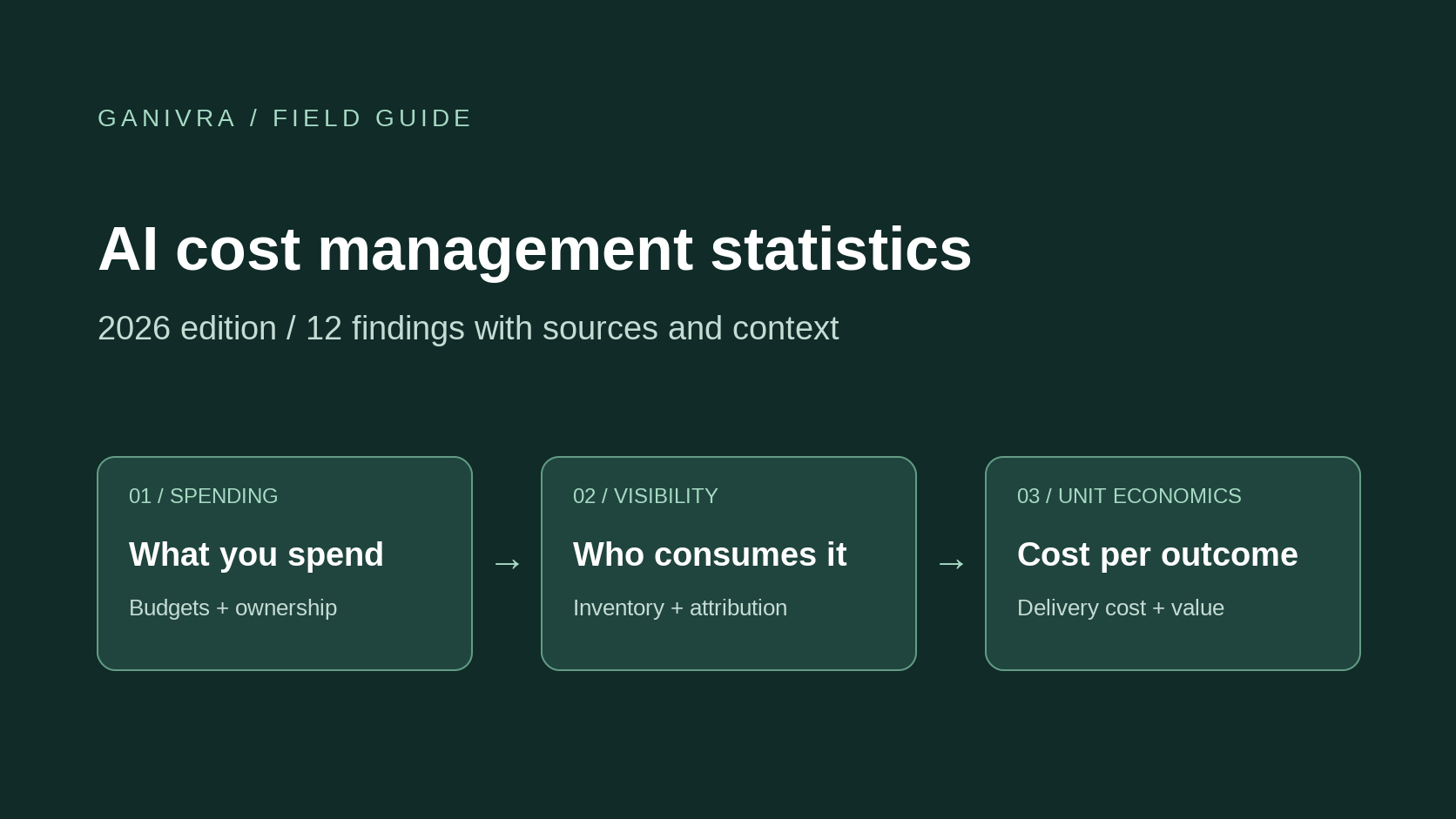
12 sourced AI cost management statistics on spending, visibility, waste and unit economics, with 2026 research dates and practical measurement guidance.
Explore 12 sourced AI agent statistics on adoption, token costs, productivity, and business value, with research dates, limitations, and forecasts.
Explore 15 sourced AI customer service statistics on adoption, productivity, costs, and ROI, with study dates, limitations, and metrics to track.
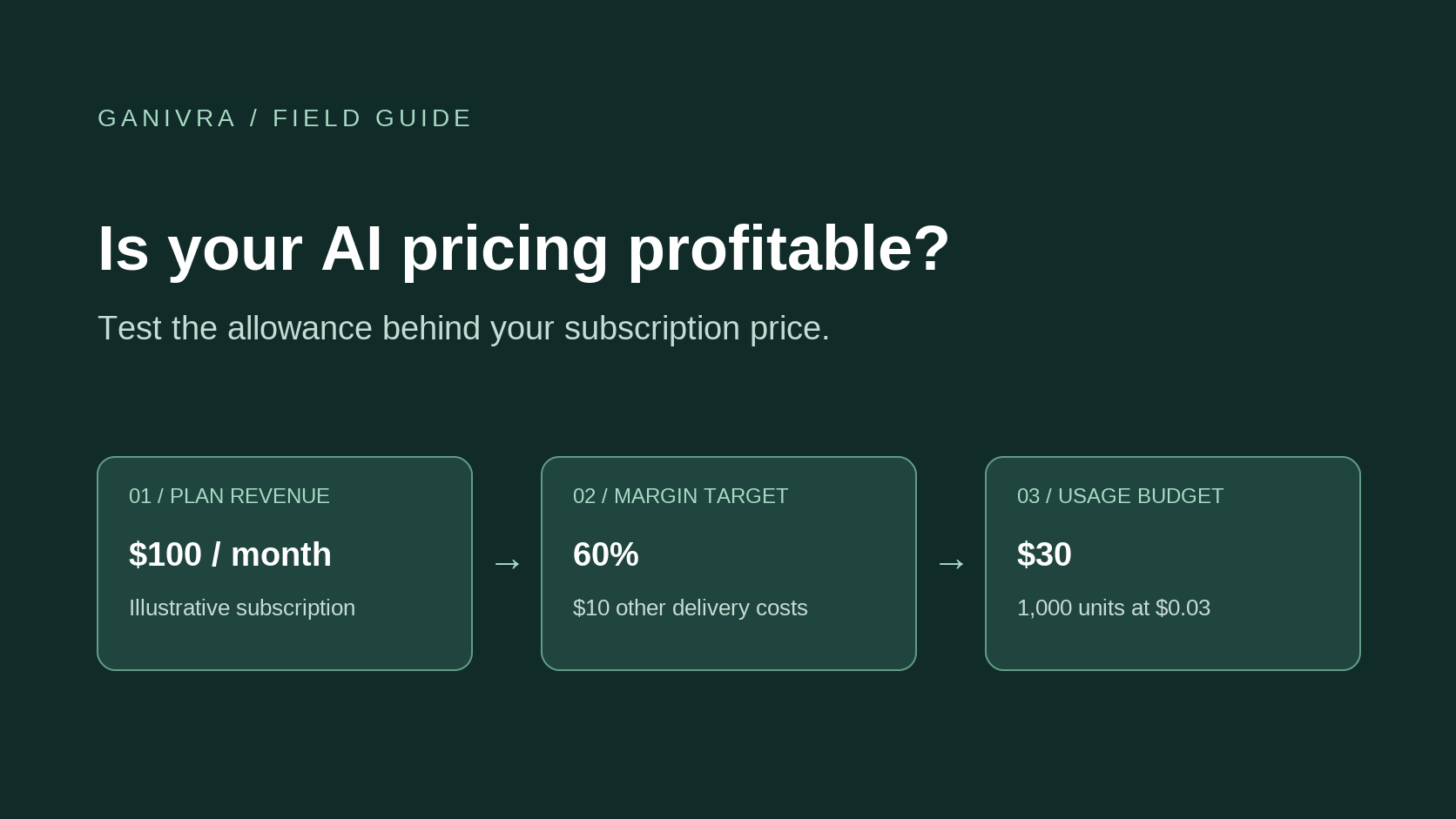
Test AI subscription pricing against real customer costs. Calculate usage allowances, stress-test heavy users, and weigh discounts, overages and margins.
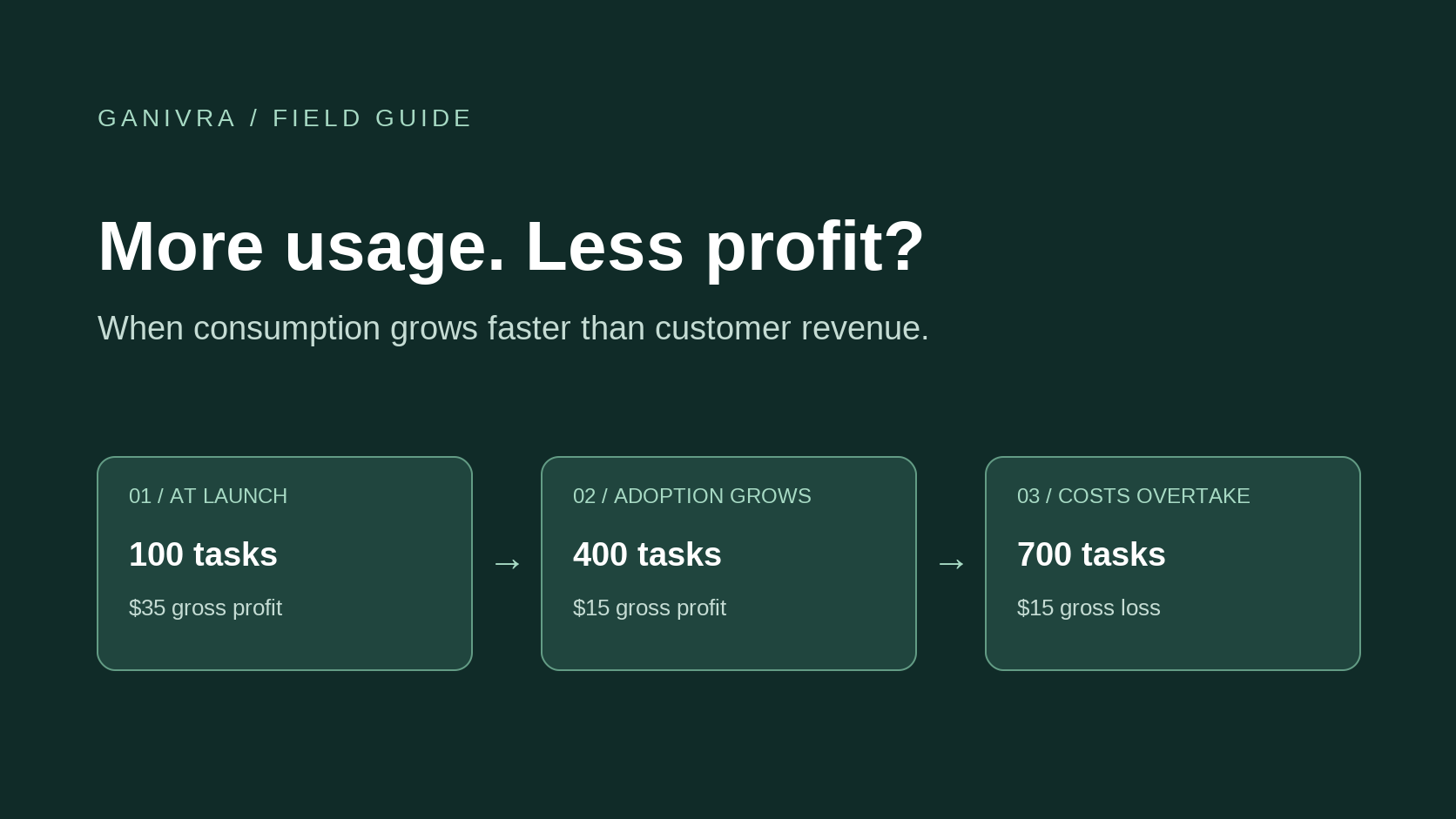
Learn why higher AI adoption can shrink SaaS profit: fixed pricing, heavier workflows, retries, and hidden delivery costs. Spot the problem by customer.
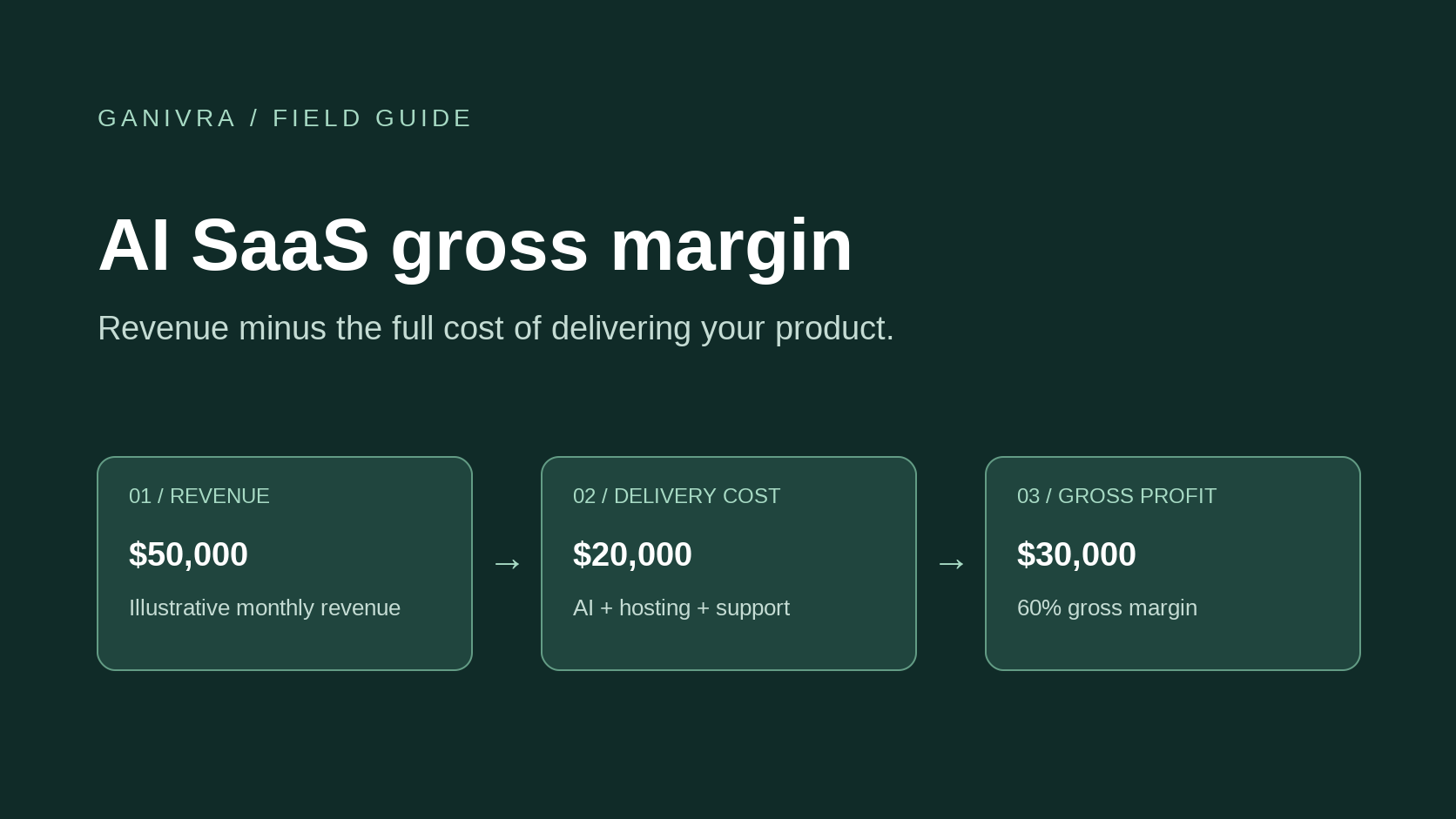
Calculate AI SaaS gross margin with a clear formula, delivery-cost checklist, and worked example. Include inference, tools, hosting, and customer support.
Compare OpenMeter and Ganivra for AI usage metering, billing, customer cost attribution, and agent workflows. Find the right fit for your AI product.
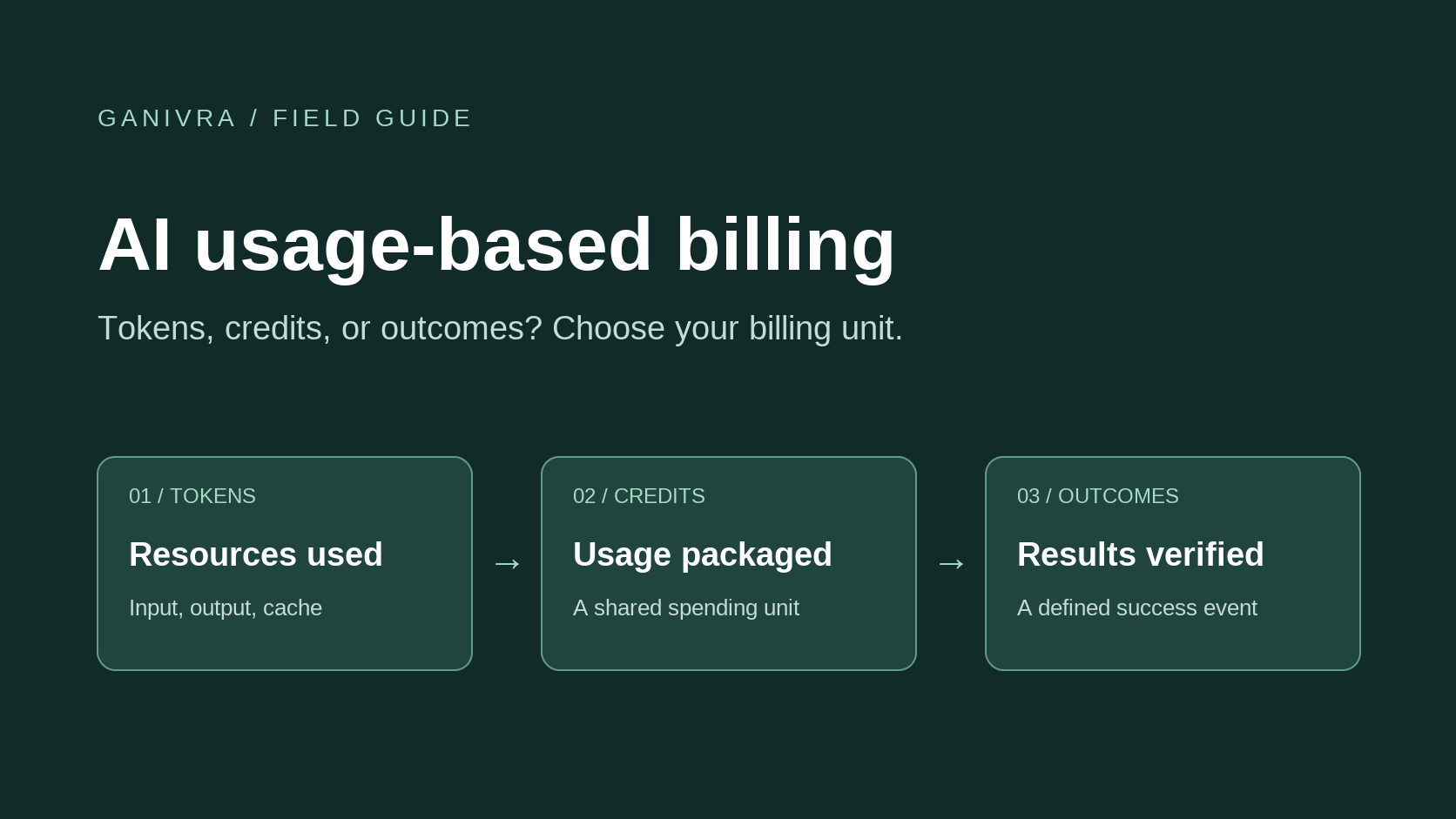
Compare token-based billing, AI credits, and outcome-based pricing. Learn how to choose a billing unit, handle retries, and protect customer margins.
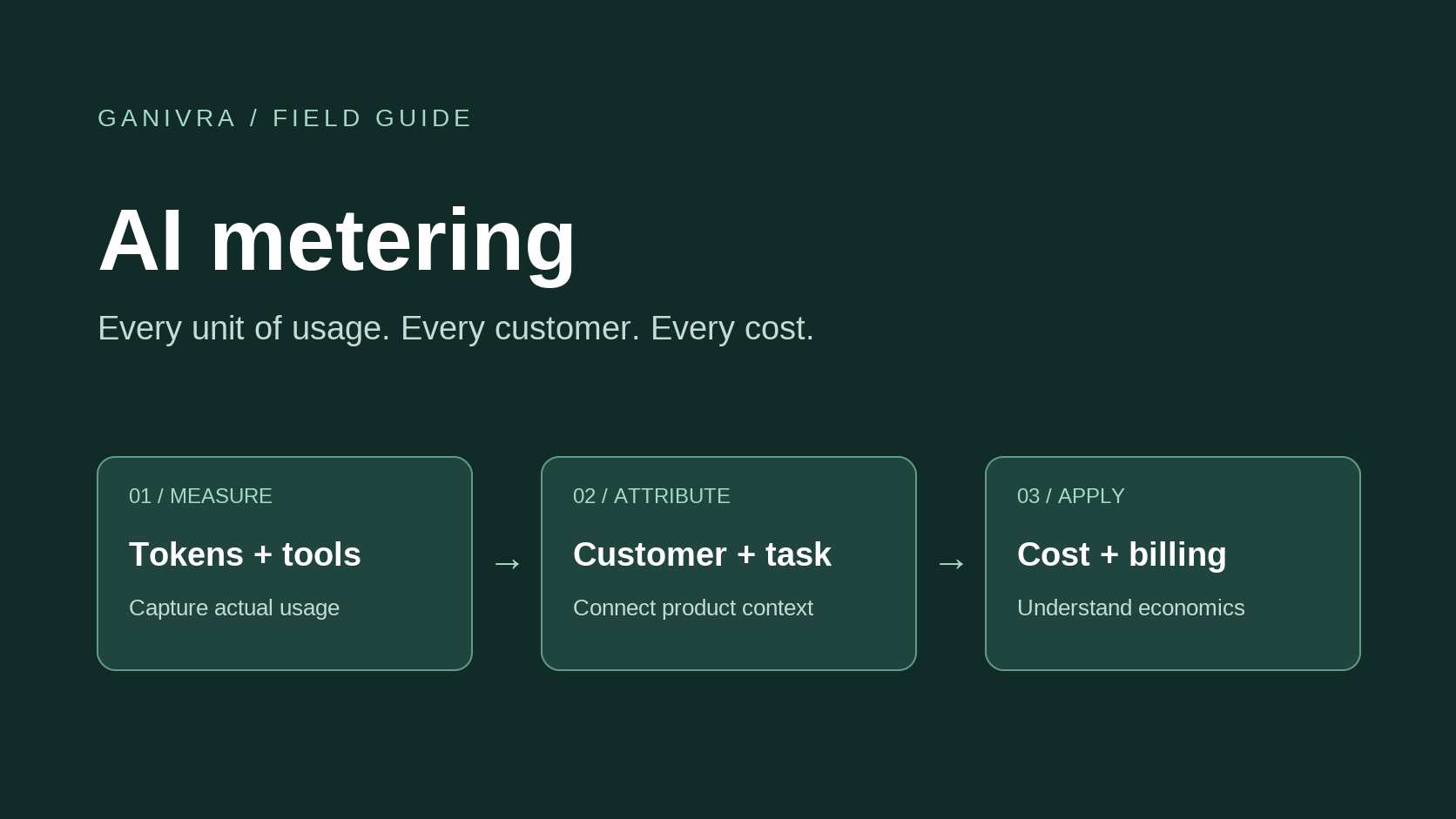
Learn how AI metering works: measure LLM tokens, attribute usage and costs to customers, and build reliable data for usage-based billing.
Compare inbound and outbound voice AI economics: dial attempts, valid intents, human answers, completed outcomes, retries, compliance and customer margin.
How response latency, overtalk, false interruptions, dead air and reconnects add voice AI minutes, escalations and cost per completed outcome.
Voice AI human-handoff economics: escalation triggers, transfer attempts, context delivery, live handling, durable resolutions, repeat calls and margin.
Why cost per answered call misstates voice AI economics, and how to replace it with loaded cost per valid intent, completed outcome and customer margin.
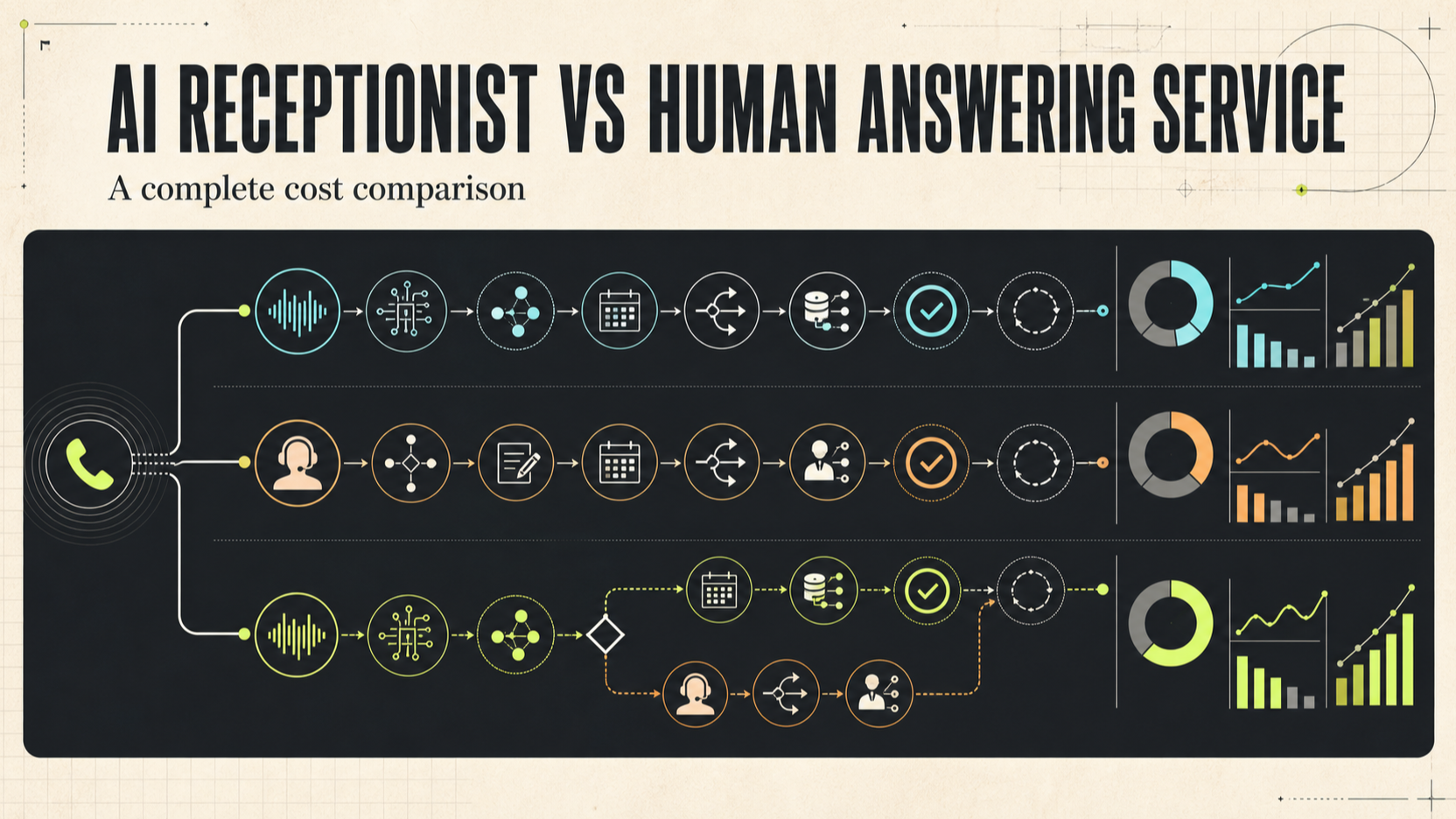
AI receptionist vs human answering service: pricing, call handling, bookings, after-hours coverage, escalations, errors and cost per completed outcome.
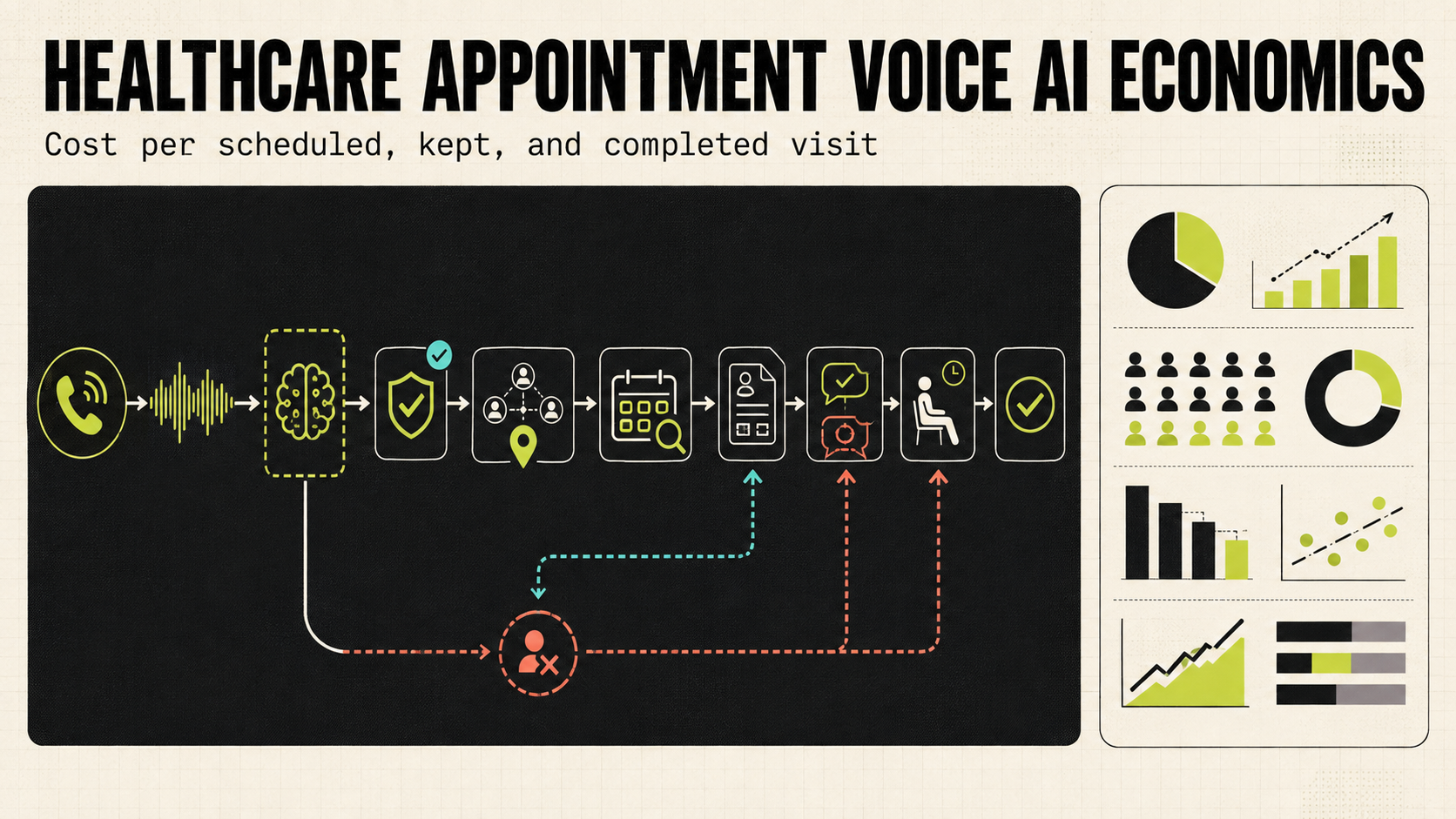
Healthcare appointment voice AI economics: patient-access calls, EHR scheduling, confirmations, rescheduling, kept appointments and completed visits.
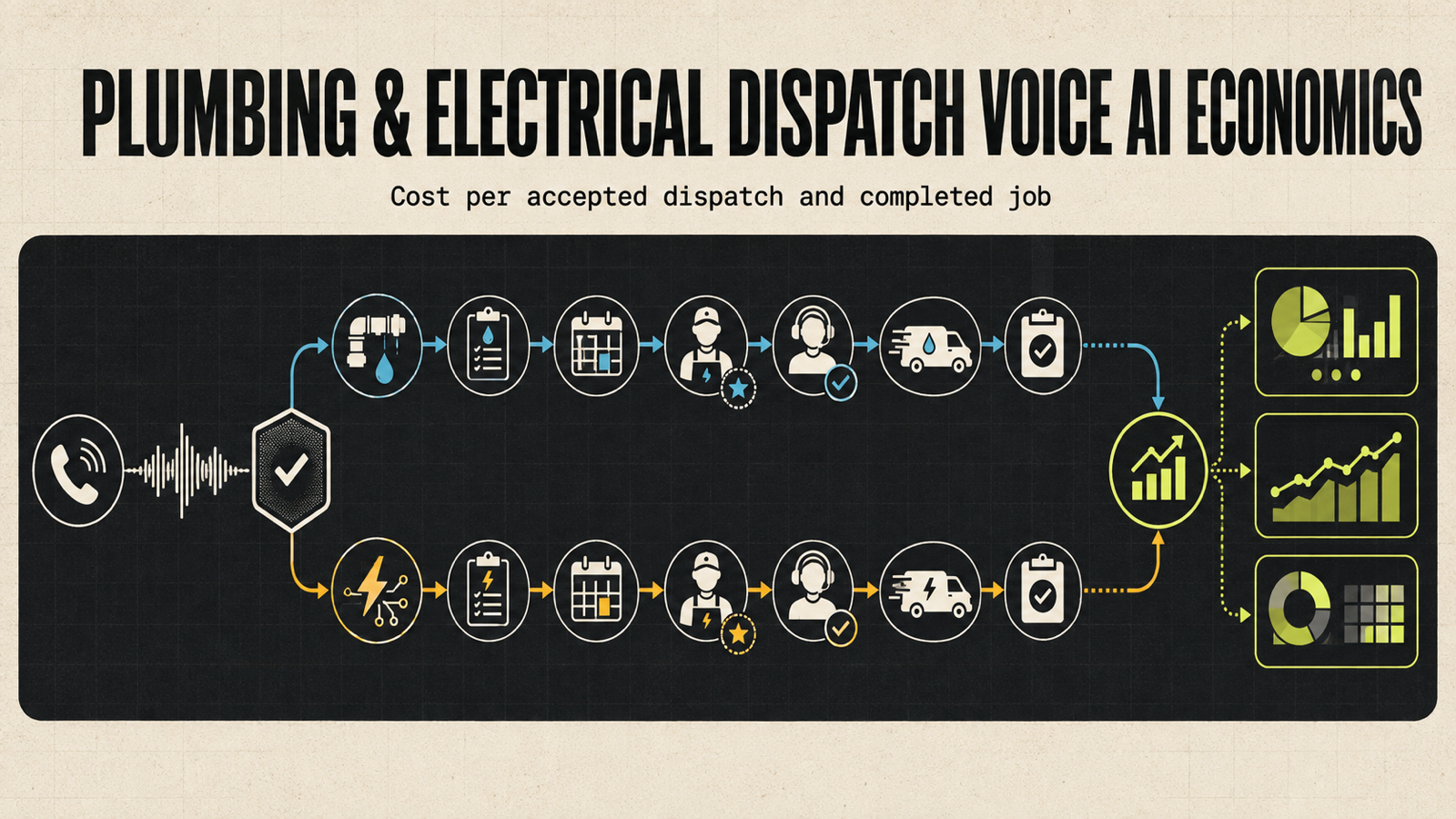
Plumbing and electrical dispatch voice AI economics: safety screening, job classification, booking, technician acceptance, completed jobs and margin.
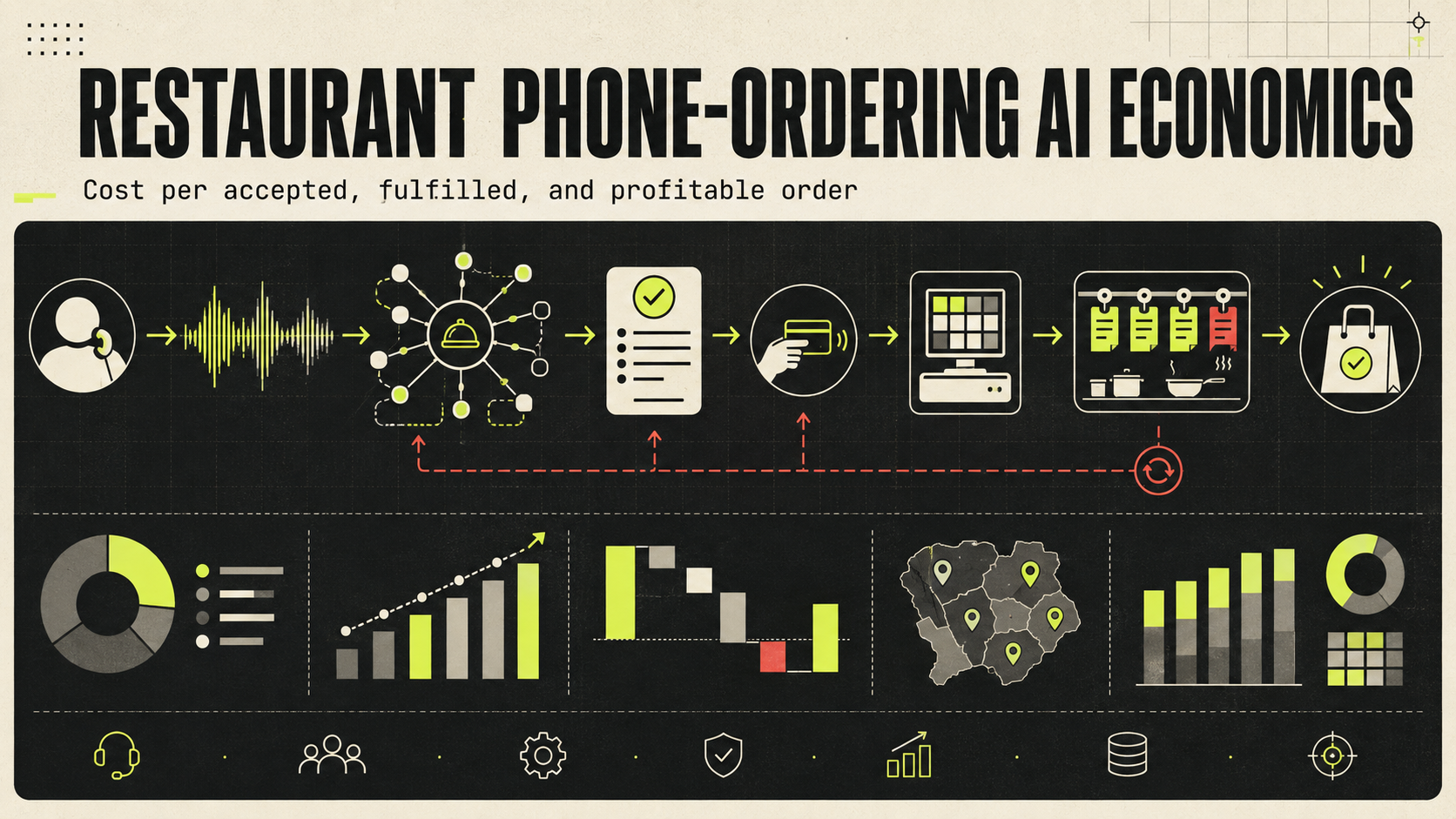
Restaurant phone-ordering AI economics: answered calls, valid orders, POS write-back, kitchen acceptance, fulfillment, refunds, remakes and margin.
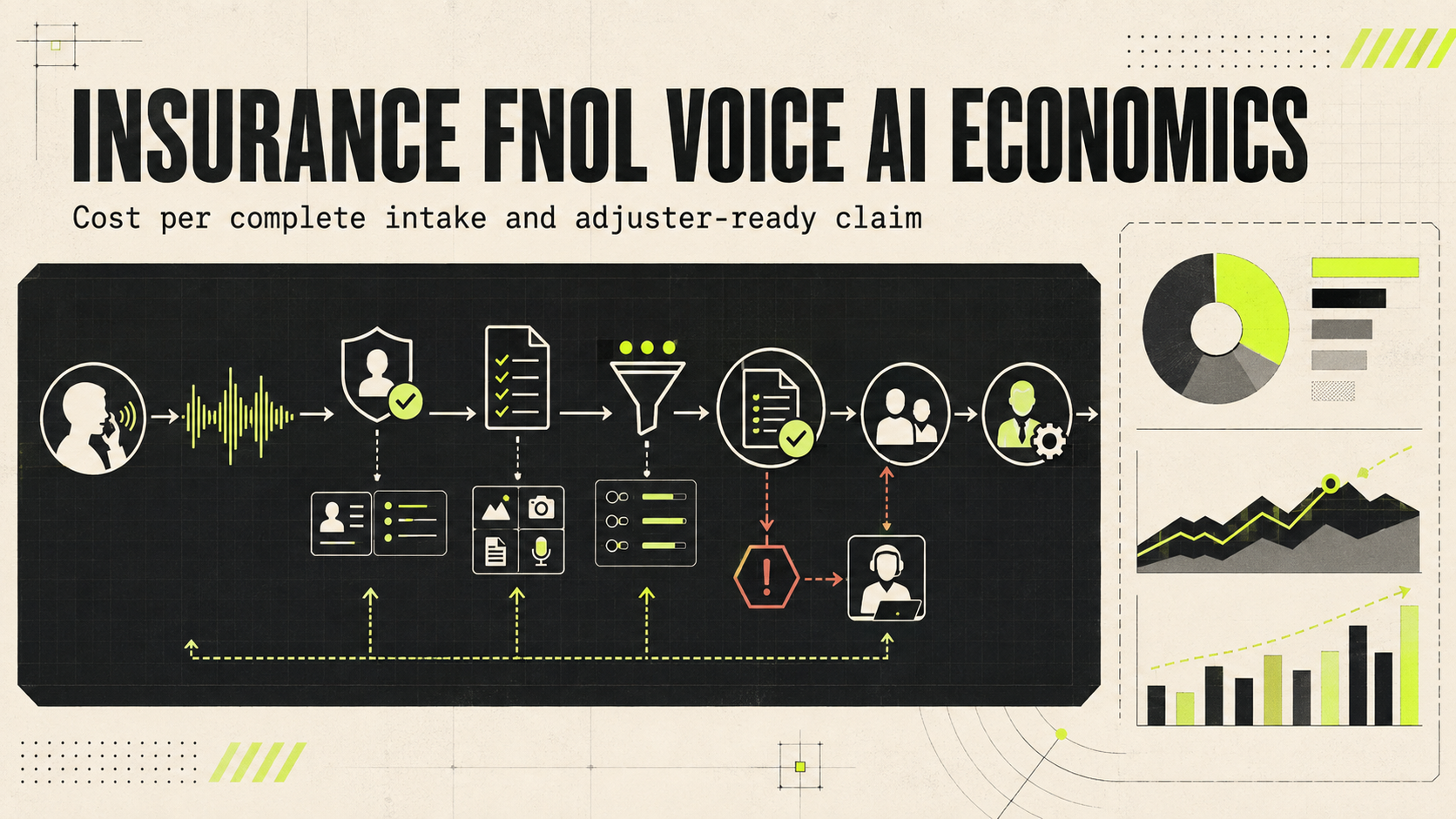
Insurance FNOL voice AI economics: loss calls, complete intake, claims-system creation, routing, human handoffs, catastrophe surges and insurer margin.
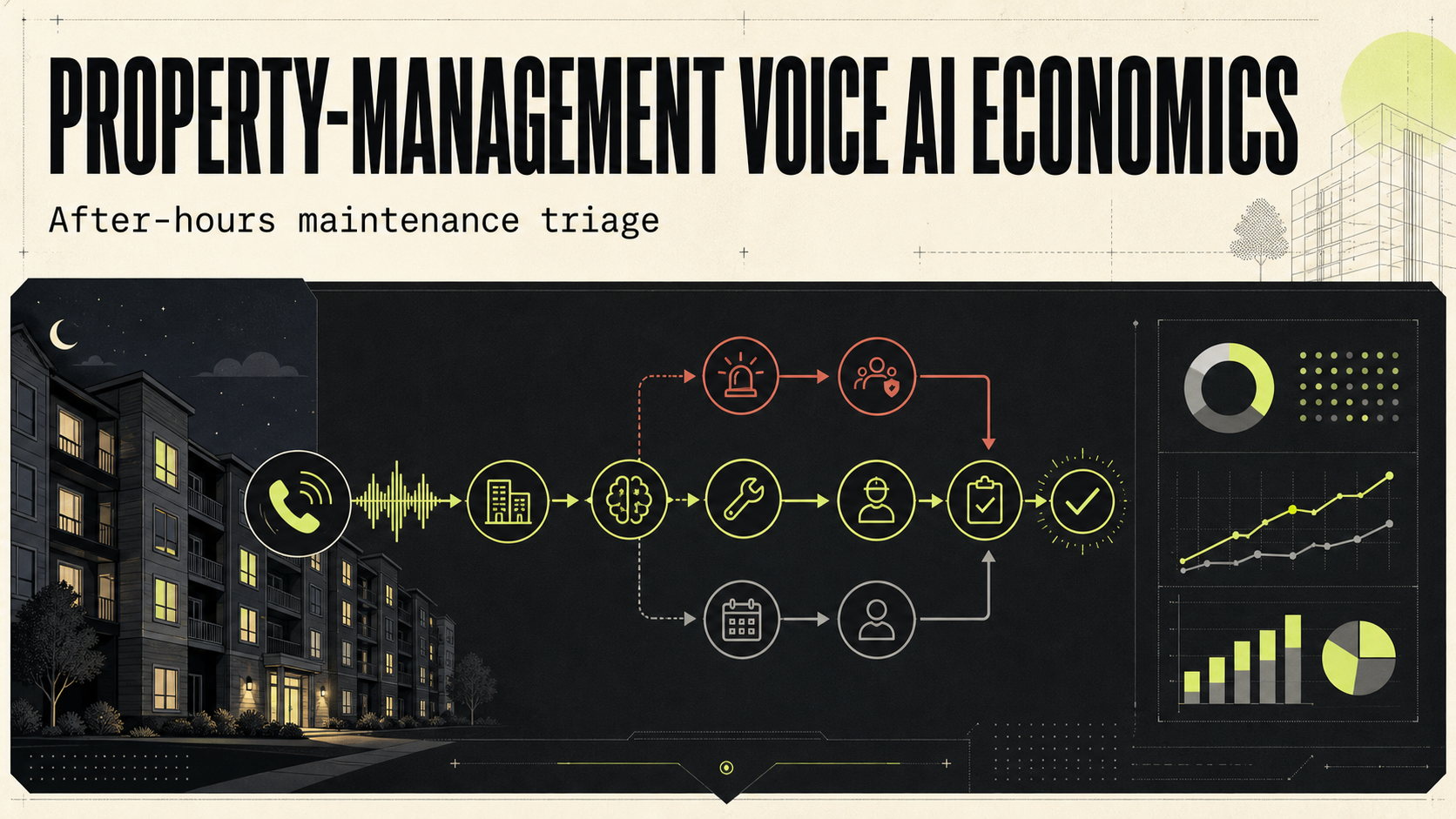
Property-management voice AI economics: after-hours maintenance calls, safety triage, on-call routing, PMS work orders, vendor dispatch and margin.
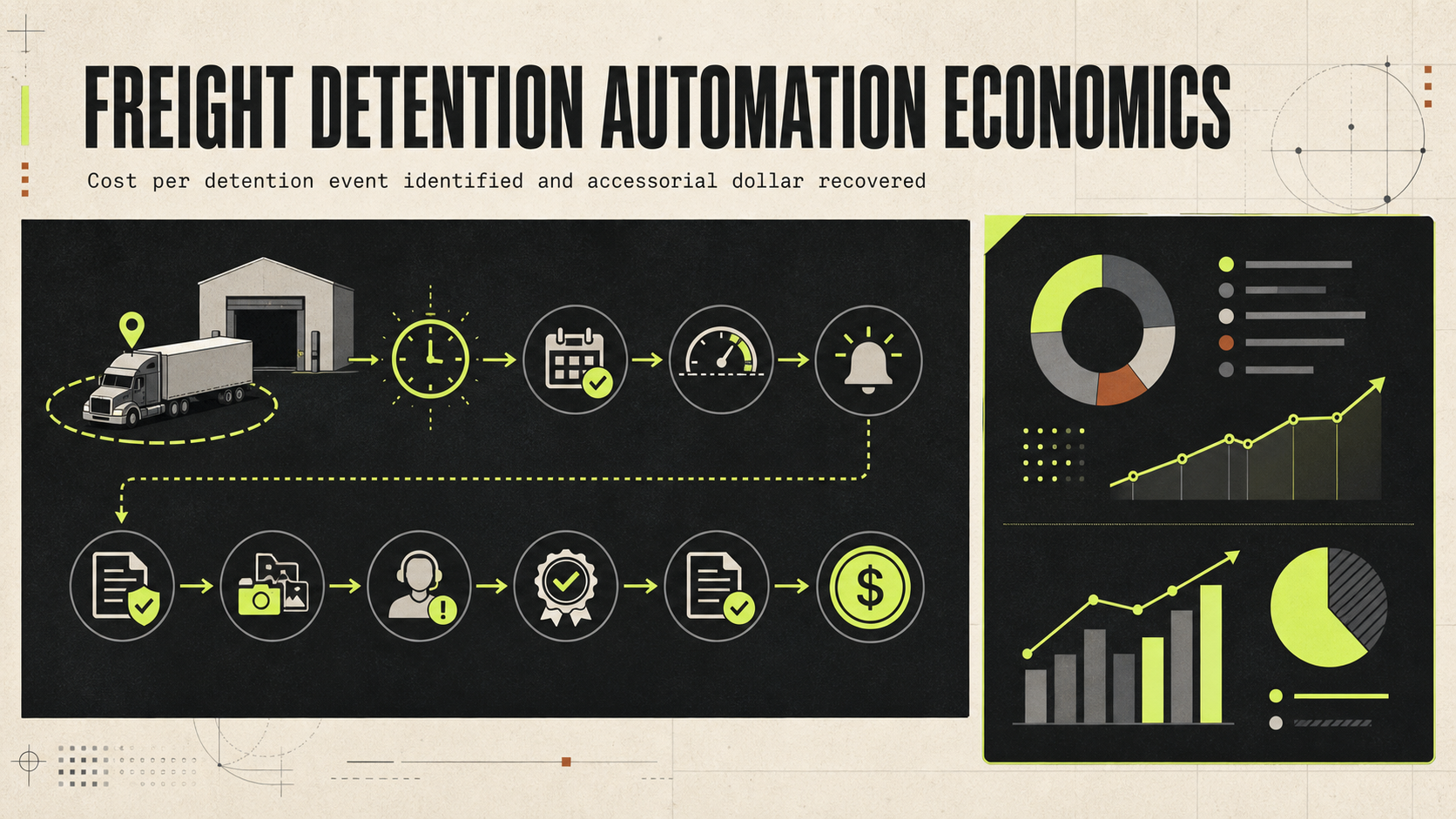
Calculate freight detention automation economics: dwell detection, contract terms, evidence, disputes, invoices, collections and recovered accessorials.
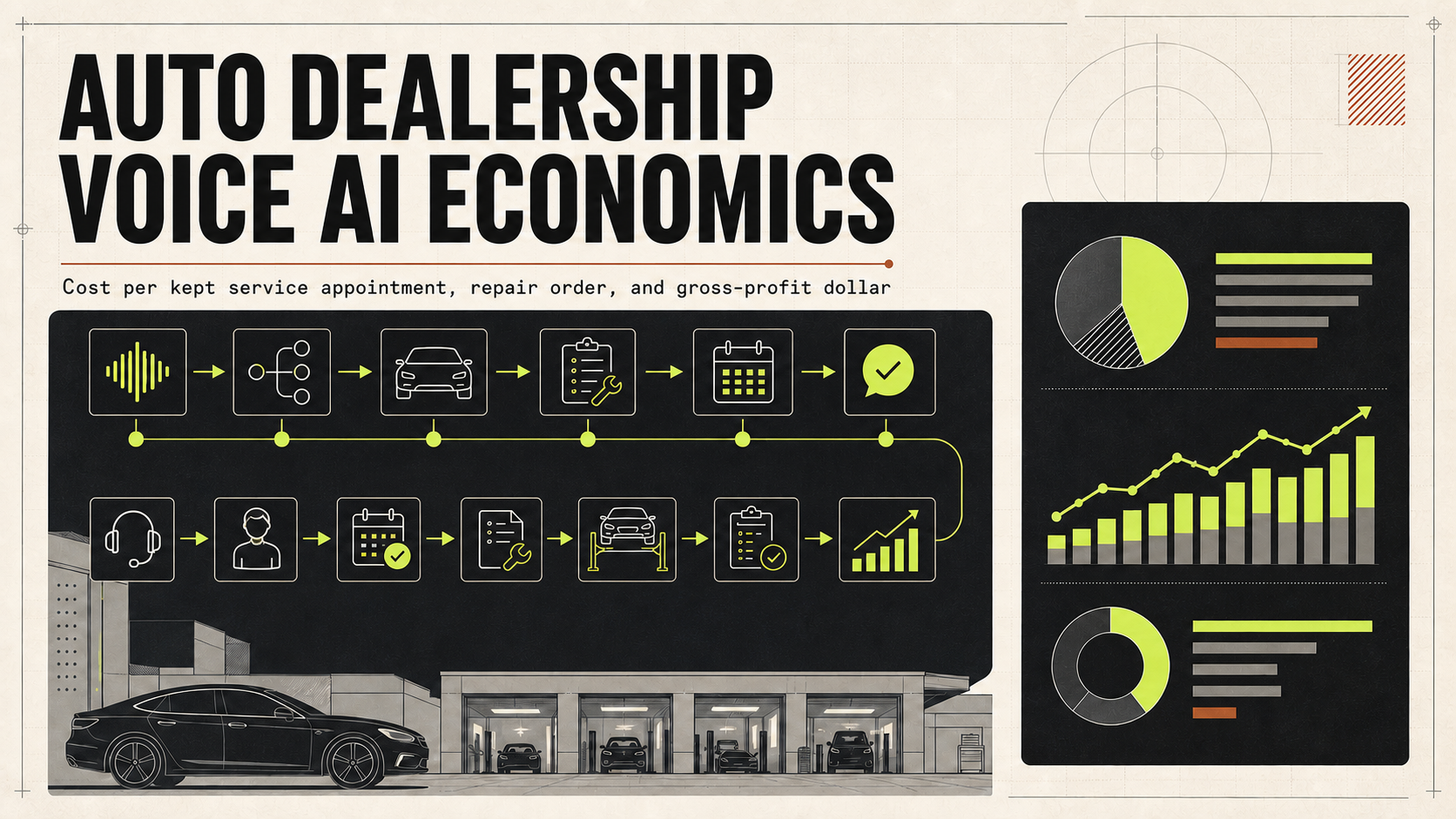
Calculate dealership voice AI economics: service calls, DMS bookings, kept appointments, advisor handoffs, repair orders and fixed-ops gross profit.
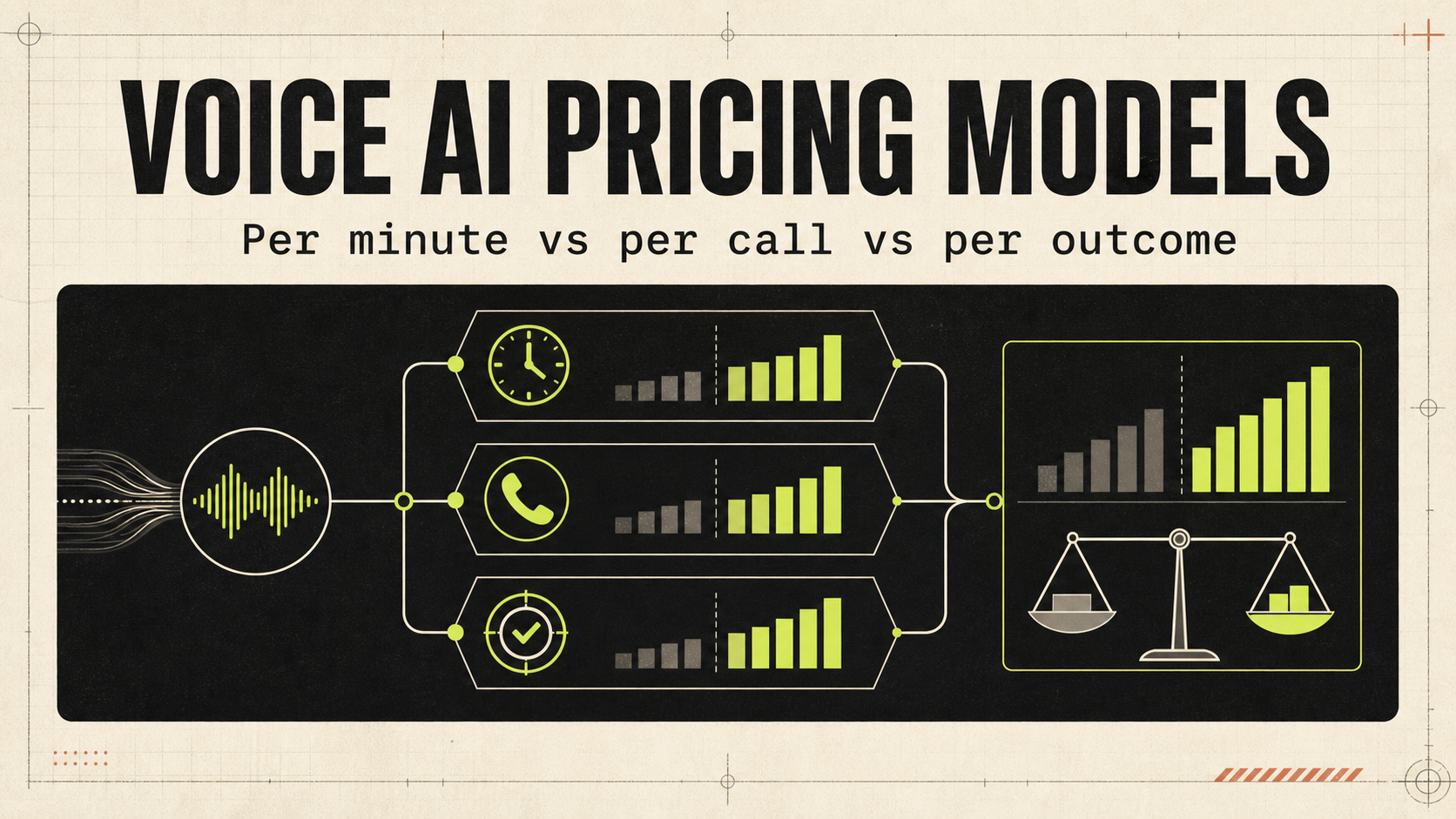
Compare voice AI pricing per minute, per call and per outcome with break-even formulas, hidden-cost checklists, worked scenarios and vendor margin.
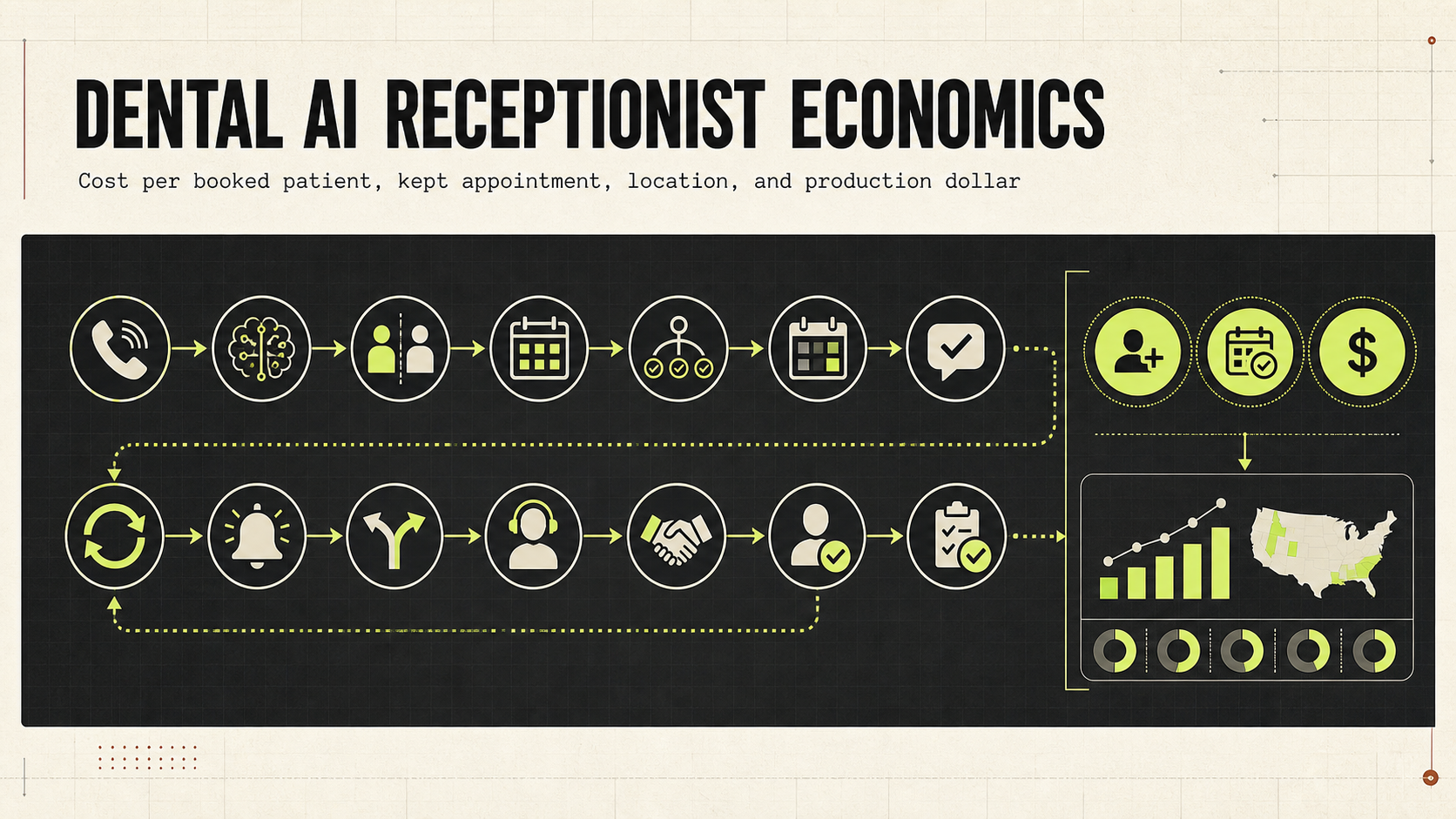
Calculate dental AI receptionist economics: calls, valid bookings, confirmations, recalls, human handoffs, kept appointments, locations and production.
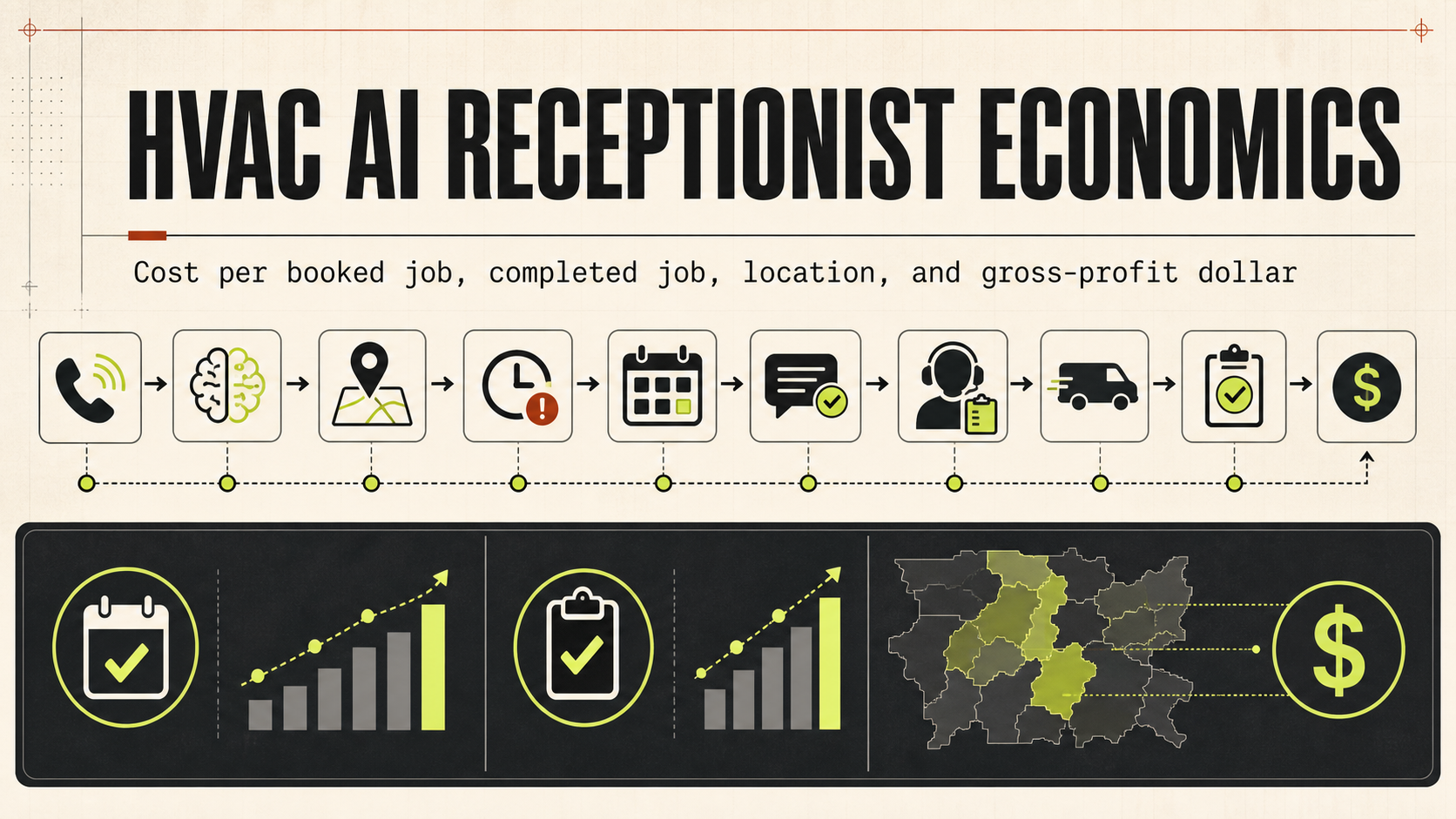
Calculate HVAC AI receptionist economics: answered calls, qualification, booking, dispatch, human handoffs, completed jobs, locations and gross profit.
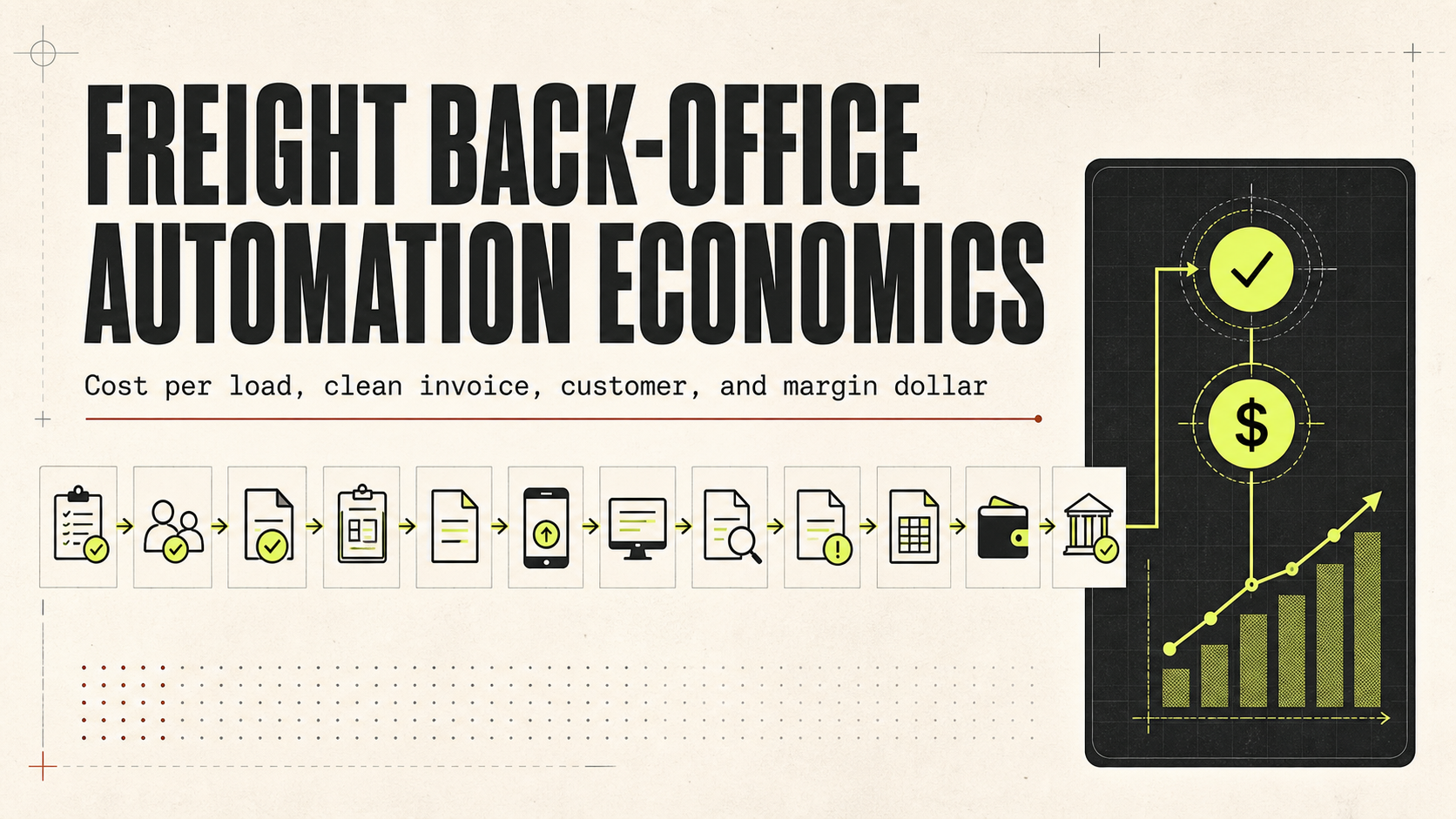
Calculate freight back-office automation economics: documents, TMS updates, freight audit, invoicing, payments, exceptions, cash collection and margin.
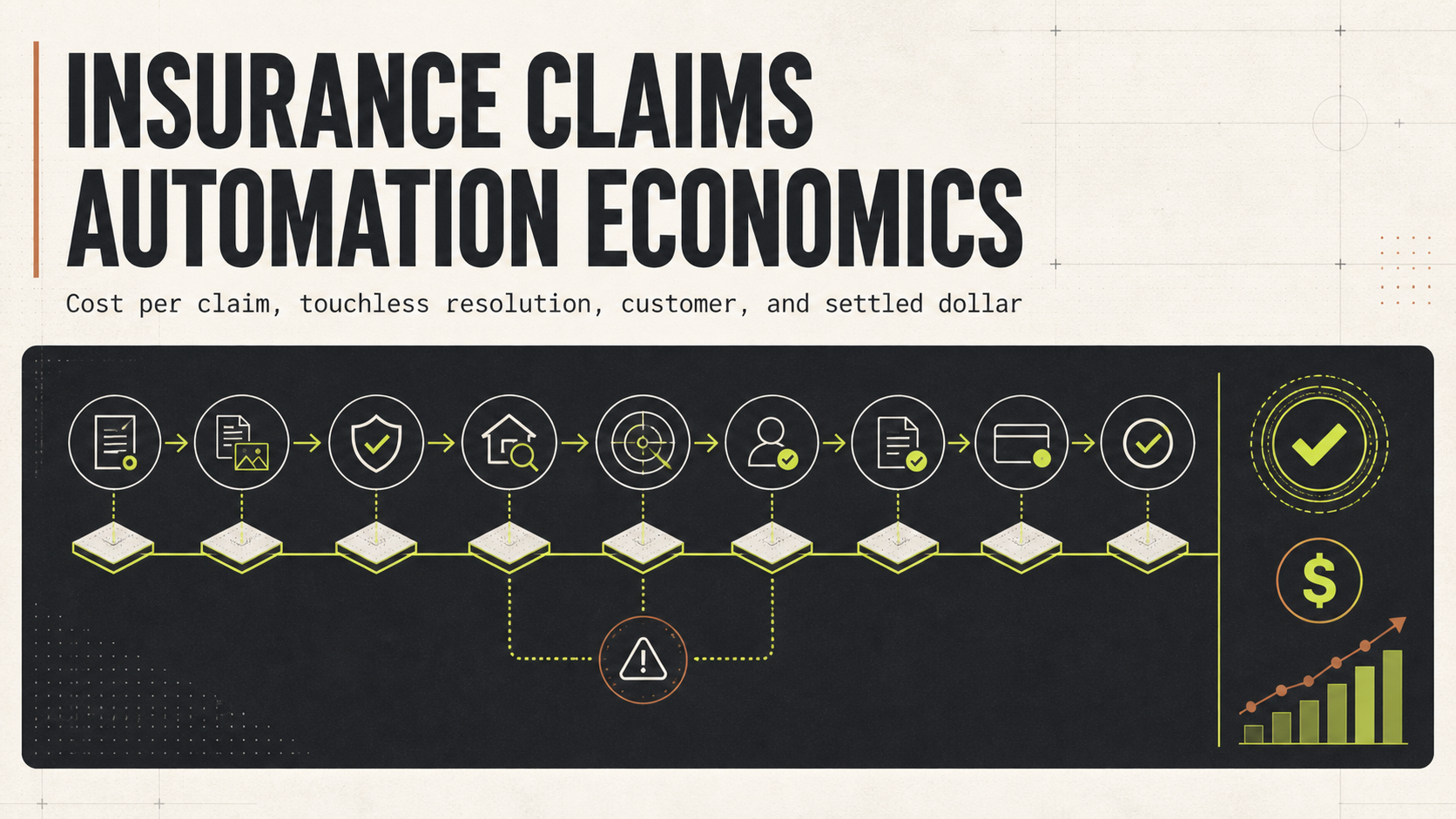
Calculate insurance claims automation economics: FNOL, document intake, triage, adjuster review, settlement, payment, exceptions and claims leakage.
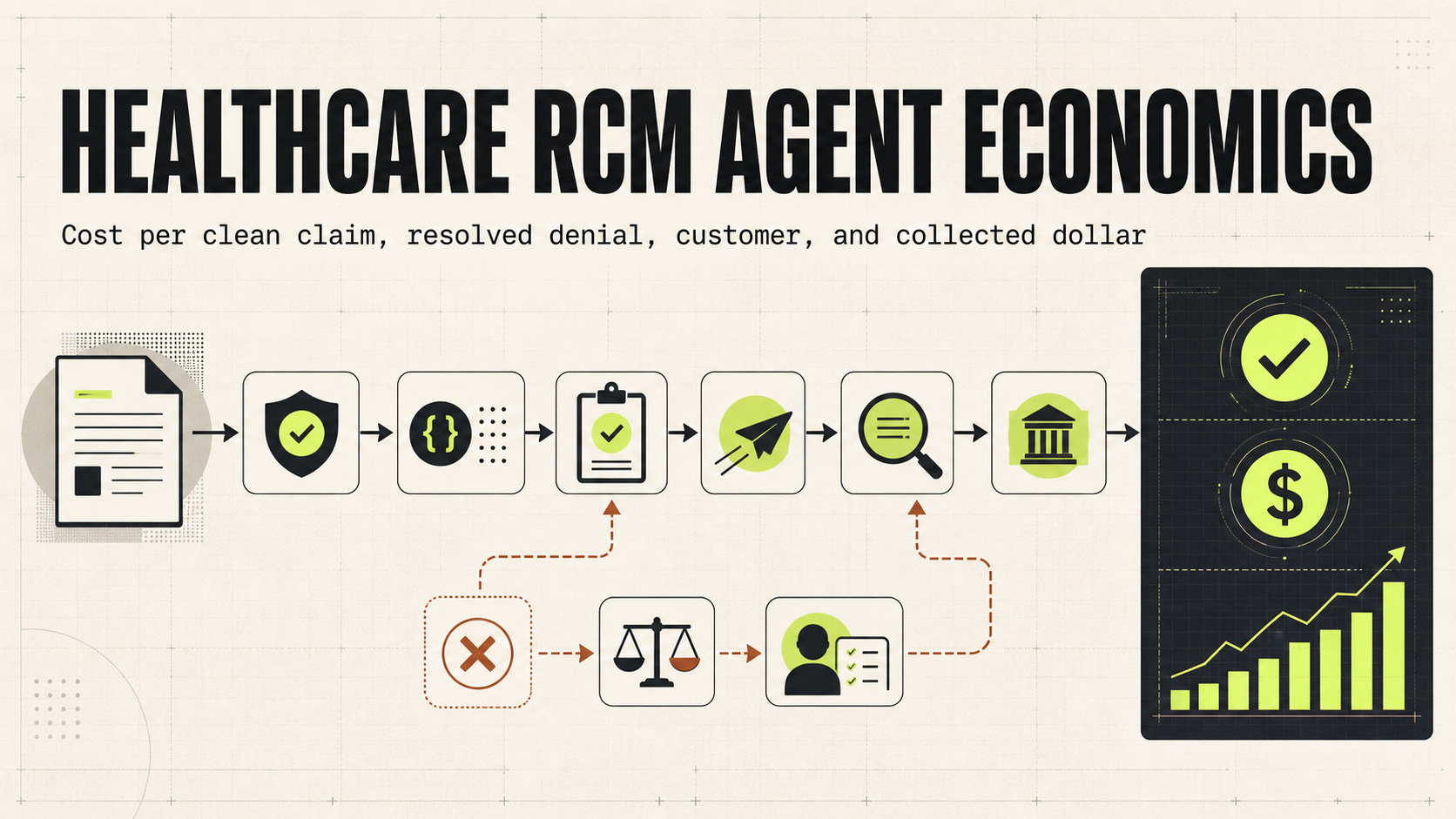
Calculate healthcare revenue-cycle agent economics: eligibility, coding, claims, denials, appeals, payment posting, human review and collections.
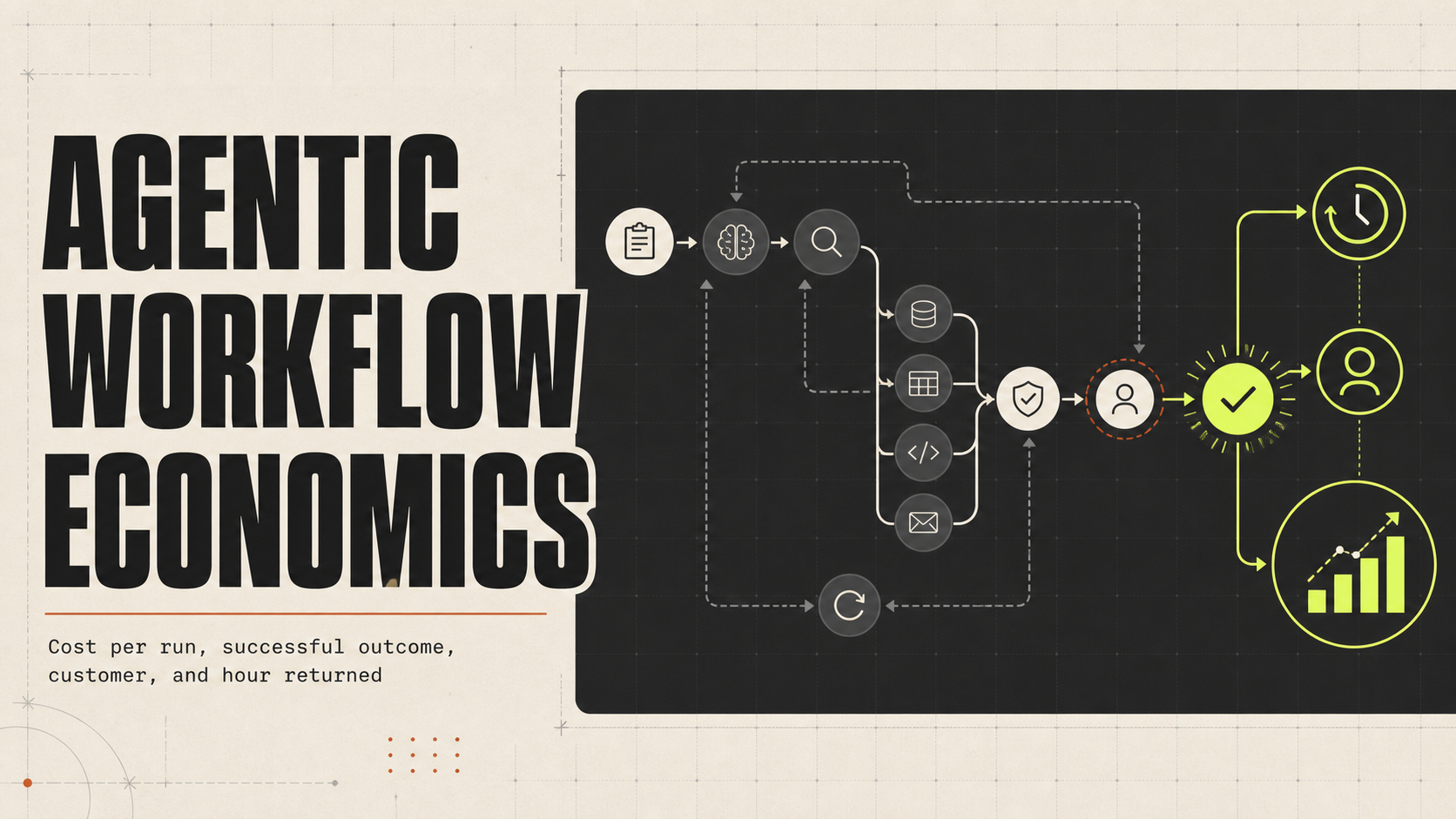
Learn how to calculate agentic workflow automation ROI across models, tools, retries, human review, successful outcomes, customers, and hours returned.
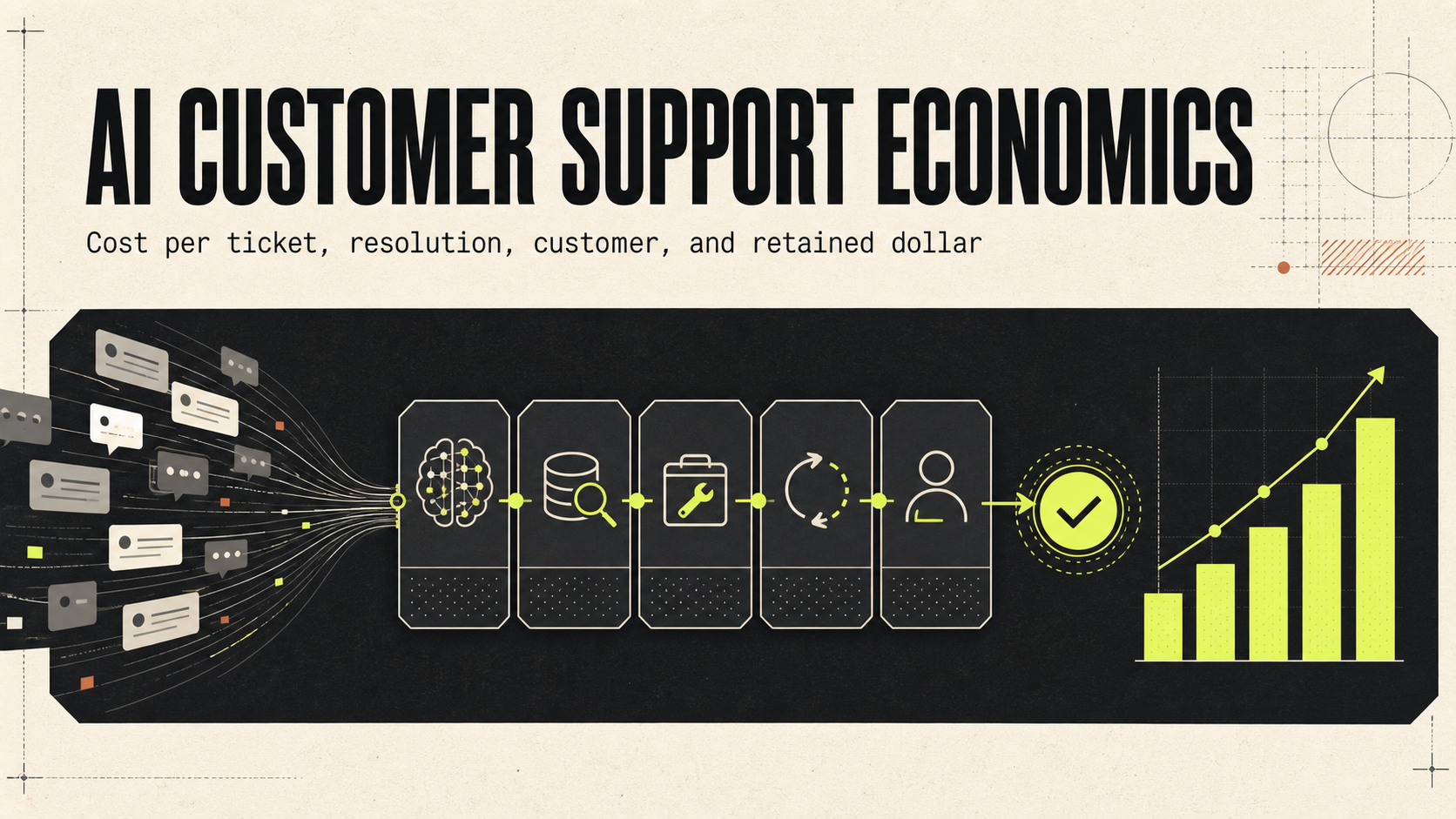
Calculate the true economics of AI customer support across tickets, durable resolutions, escalations, customers, support margin and retention.
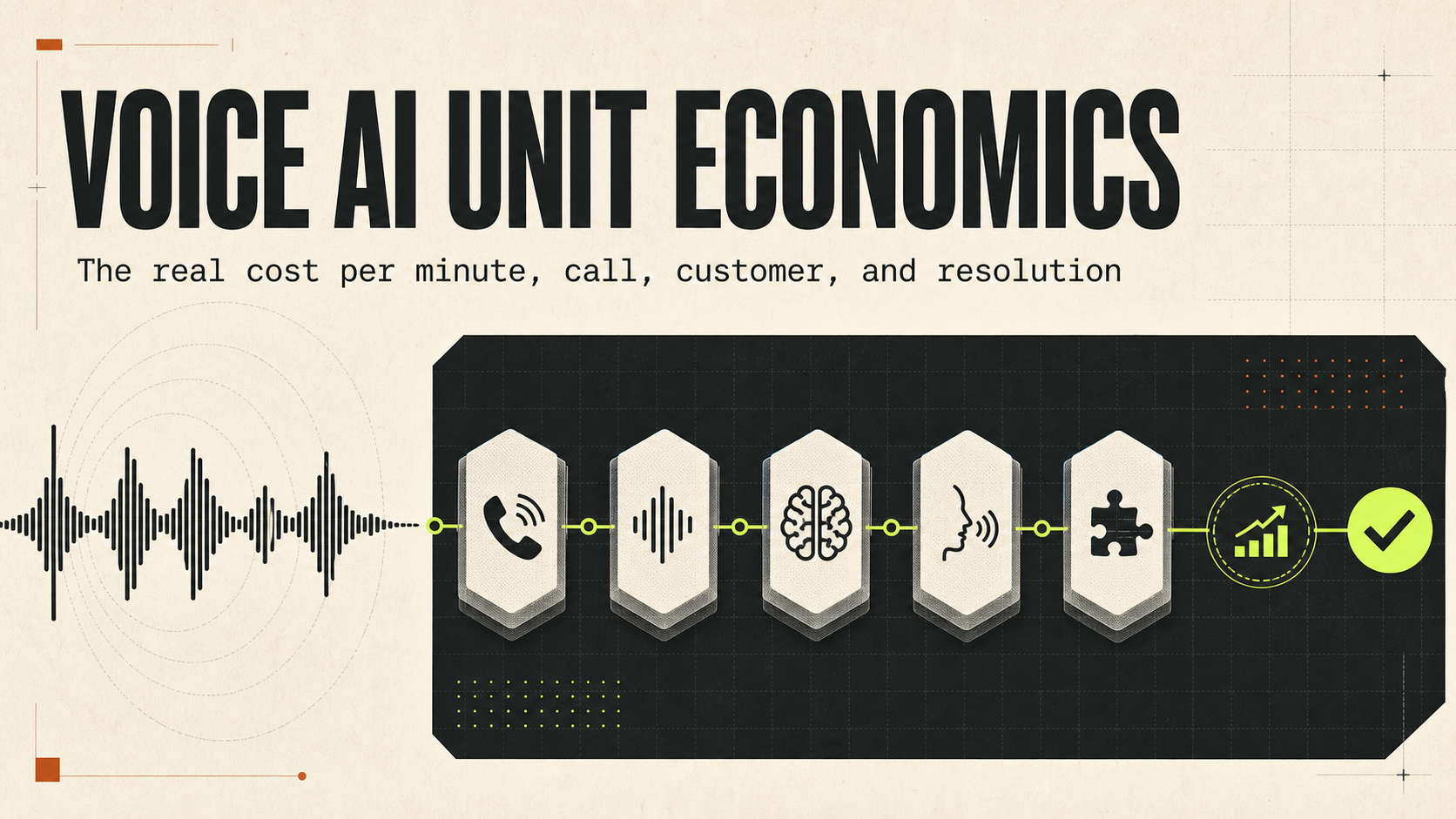
Learn how to calculate the true cost of a voice AI agent across telephony, speech, models, tools, retries, handoffs, customers, and successful resolutions.
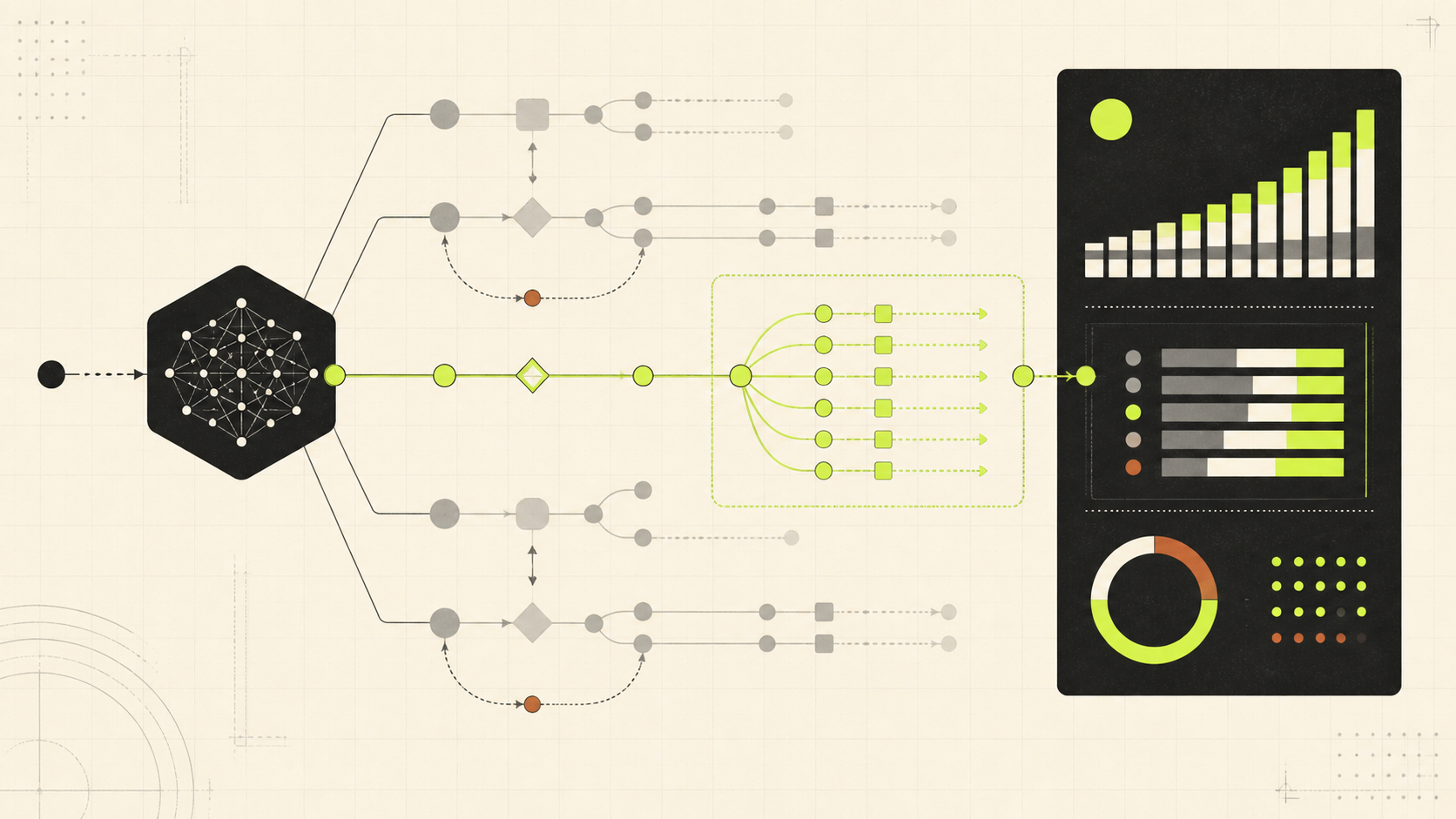
Learn how to measure MCP tool cost, downstream model spend, retries, customer cost-to-serve, and gross margin across an AI agent execution.